No change in 80:20 rule for gold import: Chakrabarty
Says If there is competition, gold will be imported at a lower cost
Press Trust of India Mumbai RBI Deputy Governor K C Chakrabarty today defended the decision to allow more banks to import gold, saying presence of more players will lead to lower cost and help the country's external balances.
"If there is competition, gold will be imported at a lower cost. Whatever gold will be imported that will be cheaper, to that extent CAD (current account deficit) will improve," he told reporters on the sidelines of an event here.
In a move seen as a precursor to easing restrictions on inward shipments of the metal, RBI has allowed more banks, including Axis Bank, Kotak Mahindra, and IndusInd Bank among others from the private sector space, to import gold.
The government and the RBI had imposed tough measures to control gold imports, one of the primary causes of the current account deficit swelling to a record high $88.2 billion in 2012-13.
The government also increased customs duty on gold to 10% from 4% to discourage imports. According to sources, RBI has permitted Axis Bank, Kotak Mahindra Bank, IndusInd Bank and Yes Bank to import gold. These banks received permission to import gold under the 80:20 scheme from the RBI some time ago.
Under the 80:20 scheme introduced on August 14, nominated agencies could import gold on condition that 20% of the shipment would be exported and the remainder kept for domestic use. Permission for subsequent imports would be given on fulfilment of the export obligation.
Only six banks and three financial institutions were allowed to import gold under the 80:20 scheme.
Chakrabarty, however, asserted that there has been no revision in the policy governing gold imports.
"The issue is that the scheme remains the same. I think the scheme is the same," he said.
Due to the import restrictions, gold and silver imports declined 71.4% to $1.63 billion in February. Imports of gold and silver in February 2013 stood at $5.24 billion. In January this year, they were $1.72 billion.
India is the second largest importer of gold, which is mainly utilised to meet the demand of the jewellery industry. Imports stood at about 830 tonnes in 2012-13.
Faced with intense pressure to relax gold import curbs, the government had said it would review the decision after getting final figures of CAD.
Recent data releases showing a reduction in the CAD, driven mainly by the squeeze on the gold front, and also the reports on increase in smuggling, have led to murmurs of a drawback of the extraordinary measures.

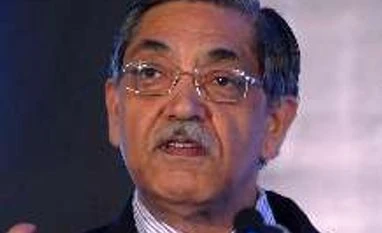 "No change in 80:20 rule for gold import: Chakrabarty")


 Connect with us on WhatsApp