ONGC share buyback opens today. Should you tender your shares?

On business front, ONGC's Q2FY19 result was above market expectation with net realisations at US$73.1/bbl with nil subsidy burden
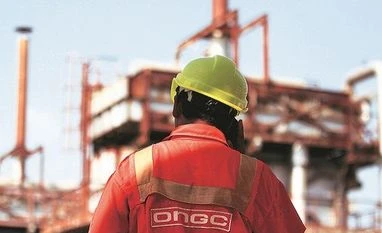
ONGC
ONGC
Swati Verma New Delhi
Last Updated : Jan 29 2019 | 9:24 AM IST
Recently, two major oil PSUs (public sector undertakings) - Indian Oil Corporation (IOC) and Oil and Natural Gas Corporation (ONGC) - announced their respective share buyback programmes as part of the government's divestment drive.

IOC plans to buyback 297.7 million shares at a price of Rs 149 apiece, amounting to Rs 44.35 billion. This apart, the company has also declared an interim dividend of 67.5 per cent i.e. Rs 6.75 per equity share of face value of Rs 10 each for the financial year 2018-19. 

On the other hand, India's biggest oil explorer ONGC has announced buyback of 253 million equity shares (1.97 per cent of paid-up share capital) for Rs 40.22 billion at Rs 159 per share, which is around 7 per cent premium to the current market price of Rs 148 (as of Monday's close). 

Most analysts find the two PSUs'buyback schemes unattractive and hence advise long-term investors to stay away from it. 

Citing recent trends being witnessed in case of Infosys and TCS, whose share prices have soared from their announced buyback prices, experts say investors may end up incurring losses by tendering their shares and seeing prices moving higher in the coming times. "Hence, unless investors have a very small holding, they should skip the buyback programme," suggests Arvind Kejriwal, Founder of Kejriwal Research.

As of September 30, 2018, IOC had around Rs 115 billion as cash and cash equivalent. The total appropriation towards buyback and interim dividend will be around 110 billion, thereby leaving minimum amount for day-to-day business, observes Rajnath Yadav, Senior Research Analyst - Fundamental Research Desk at Choice Broking. 

CLICK HERE TO TRACK ONGC STOCK PRICE

In addition, the company has outlayed a capex of Rs 230 billion and Rs 280 billion for FY19 and FY20, respectively. Currently, it has a net debt to equity ratio of 0.4 times. Post the drastic fall in the international crude prices, it is anticipated that oil marketing companies (OMCs) like IOC would generate higher gross margins, which would shore up their finances. "Thus, we recommend long term investors not to tender their shares in this buyback process, while short term investors can tender the same,"advises Yadav.

However, Nilesh Ghuge, an oil and gas analyst at HDFC Securities, doesn't agree. He finds IOC's buyback plan along with dividend a good opportunity for retail investors to make money. Ghuge advises retail investors should tender more than the alotted shares as it will increase the acceptance ratio. Explaining further Ghuge says buybacks don't see much particpation from retail investors due to lack of undertanding and awareness, however, they should use this opportunity and earn around 8-9 per cent of returns.

For ONGC, Ghuge has a neutral view. Most analysts expect acceptance ratio to be poor for retail investors at 17 per cent (217 mn of retail investors having investment below Rs 2 lakh) considering 15 per cent reservation be made for small retail investors in buyback offers.

On business front, ONGC's Q2FY19 result was above market expectation with net realisations at US$73.1/bbl with nil subsidy burden. The company does not expect subsidy burden for H2FY19, as crude oil prices have corrected nearly 30% from peak levels. However, the decline in oil price can impact the future earning as the company operates in oil exploration activities, says Yadav.  

"Higher capex for next two fiscals would put pressure on the free cash flows. Meanwhile, the sharp correction in stock price has also made valuations attractive with the scrip trading at P/E(x) of 6 of FY20E EPS of Rs25. Thus, we recommend long term investors not to tender their shares in this buyback process, while short term investors can tender the same," he said. 

One subscription. Two world-class reads.

Already subscribed? Log in

Subscribe to read the full story →
*Subscribe to Business Standard digital and get complimentary access to The New York Times

Smart Quarterly

₹900

3 Months

₹300/Month

SAVE 25%

Smart Essential

₹2,700

1 Year

₹225/Month

SAVE 46%
*Complimentary New York Times access for the 2nd year will be given after 12 months

Super Saver

₹3,900

2 Years

₹162/Month

Subscribe

Renews automatically, cancel anytime

Here’s what’s included in our digital subscription plans

Exclusive premium stories online

  • Over 30 premium stories daily, handpicked by our editors

Complimentary Access to The New York Times

  • News, Games, Cooking, Audio, Wirecutter & The Athletic

Business Standard Epaper

  • Digital replica of our daily newspaper — with options to read, save, and share

Curated Newsletters

  • Insights on markets, finance, politics, tech, and more delivered to your inbox

Market Analysis & Investment Insights

  • In-depth market analysis & insights with access to The Smart Investor

Archives

  • Repository of articles and publications dating back to 1997

Ad-free Reading

  • Uninterrupted reading experience with no advertisements

Seamless Access Across All Devices

  • Access Business Standard across devices — mobile, tablet, or PC, via web or app

Next Story



