Product needs to be self-sustaining to become attractive: R Sundararaman
Chief of new products, India Index Services & Products and Dotex International
Sachin P Mampatta Mumbai The National Stock Exchange’s move to launch a derivative product which allows investors to bet on market volatility (a VIX product), starting later this month, has thrown up a number of questions.
R Sundararaman, chief of new products at India Index Services & Products and Dotex International, both NSE subsidiaries, is the man to answer all the questions. In an interview with with Sachin P Mampatta, he does so. Edited excerpts:
Who would be the primary users of this product? People with a directional view on volatility, people who are options traders and have options positions and people who want to hedge their portfolio from volatility.
Is there a reason for starting with futures and not options as well? Previously, we started with index futures. Similarly, we started with currency futures. Why do people in India always prefer to start with futures? Futures are linear instruments, which is not the case with options. It is easier to understand futures, so we begin with that.
Taking that ahead, would you be looking to add to the VIX product portfolio, for example in the form of VIX-based ETFs (exchange traded funds)? It is the market which would need to come up with such products because asset management companies generally do these things…world-over, we find there are ETFs on VIX, there are options on VIX, there are futures on VIX. They augment each other and so, it becomes a nice basket for the market to trade volatility. Probably, India would also develop in that direction.
Have you had any conversations with the regulator about the possibility of any other products? NSE regularly engages and submits details on market requirements to the regulator.
Would you have separately applied for the VIX option product? Any new product which we want to come up with, we need to have an application and an approval.
So, you have already applied? The market is aware of this requirement and so are the regulators. We have put some details to the regulator but that will be of a preliminary nature. When the regulator takes it up for discussion, there will be more information asked, more replies given and then the approval.
Why did you decide on weekly contracts when other products are monthly contracts? The way the options trade, the way the market views volatility, we thought weekly would be good to start with. There has also been good demand for weekly derivative products in the equity segment.
Market participants were asking us to have short-term weekly index options and index futures in the equity derivatives segment. We do not have it now. So, why not start with a weekly product and see how it works? And, with the volatility profile and the options trading profile, we were able to see that weekly makes good sense at this point. As the market grows, the periodicity and tenure can all change. At this point, this was what we thought we would start with.
Why does the contract expire on Tuesday, as opposed to Thursday, like your popular equity derivative contracts? The fourth Tuesday will result in an India VIX which will be 30 days to expiry. If you look at it, it will be exactly coinciding with the expiry of the next month’s options. For example, if you look at the time difference between the last Tuesday of March expiry for VIX and the April options expiry, it will be exactly 30 days. That is why we thought we should have Tuesday as expiry, so that every month this coinciding path happens. That is the reason we selected Tuesday.
Initially, will you be looking at market-making or any sort of incentive scheme to attract volumes? At this point, we have not thought of any incentive scheme. The product needs to be self-sustaining to become attractive. We need to understand the market expectations with regard to this product because what happens in the market is indicative of what sort of support the market would require.

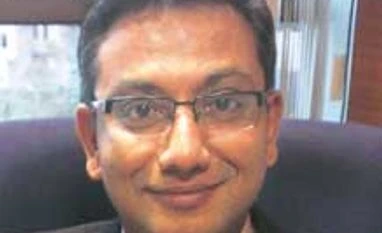 "Product needs to be self-sustaining to become attractive: R Sundararaman")


 Connect with us on WhatsApp