The Indian markets are at a new high and the rupee is gaining ground, even as the US Federal Reserve continues to reduce its bond buying programme.
Jyoti Vaswani, chief investment officer & director, fund management, Aviva Life Insurance, talks to Vishal Chhabria on why the markets are rising, domestic cyclicals are finding favour and some EMs including India could continue to do well even as developed market economic growth picks up. Edited excerpts:
Indian markets are up about seven per cent in a month, wherein information technology (IT), pharmaceuticals and fast moving consumer goods are out of favour and cyclicals have gained ground. What do you make of the rally? The rally is mainly due to resumption of foreign institutional investor inflows. The
macros for India have also seen a major improvement in the recent past. Inflation has been trending down, the currency has stabilised, the fiscal deficit is controlled and the current account deficit is well within two per cent of gross domestic product. This, coupled with the expectation of a stable government coming to power, has led to this rally.
And, when the markets rise, defensives tend to underperform and cyclicals to outperform. This is evident in the current rally. The rupee has also appreciated and, hence, there is a larger impact on the IT and p harma sectors. We expect the markets to remain volatile.
What impact will the Russia-Ukraine event have on India?
Such geopolitical events tend to impact everyone. If an amicable solution is not arrived at and the situation worsens, there will be an impact on both the developed countries and emerging markets. Oil prices could rise, which will have a significant impact on India. All companies having exposure to this region will clearly be impacted.
Emerging market (EM) equities have been out of flavour recently. With the US and other developed economies looking up, the (US Fed’s) taper fear elevated, what is the outlook for EMs, including India?
Yes, there has been less focus on EMs of late. As a result of the Fed taper, we might continue to see outflows from EMs. However, this might not be applicable to all. Some EMs have domestic issues, political and structural, which have resulted in net outflows. India and Indonesia have been resilient. In fact, we have seen inflows resuming in equity in the past fortnight or so. Even on the debt side, we have seen good inflows in calendar year (CY) 2014.
So, individual countries will continue to attract FII inflows; India could be one. In India, the political outcome will be watched very closely, which will determine flows in the second half of CY2014.
The US is growing at two to three per cent (a year) and their interest rates are close to zero. But, if interest rates start moving up, won’t the risk-reward become unfavourable for EMs?
Not necessarily. If you look at history, rising US bond yields have augured well for Indian equity markets. So, it is also to do with the fact that the developed world is doing well; there is an impact on the developing world. FII flows have been negative only twice since 1993, when FIIs were allowed to invest in India. During this period, the Western world was growing and yet there was no major impact on FII inflows.
In the run-up to the elections, how do you see the markets behaving?
The markets will be volatile and a pre-election rally cannot be ruled out. However, the AAP (Aam Aadmi Party) and the third front could take away some seats, which might make it difficult for any party to get a clear majority. As exit polls keep throwing up results and as the trends keep emerging, markets will react to that. The other factors, like FII flows, will add to volatility.
Should the worst come true and we don’t have a stable government, what is the downside you see for the markets, earnings and the rupee?
There is some amount of earnings recovery built into the second half. If you have an unstable government, there would be some earnings downgrades. The expected recovery is not based on the actions the government will take once it comes into power. Any government that comes in June-July will initiate some action; by the time those show some result, the financial year will be over. If we don’t get a stable government, the markets could correct by about 10 per cent. The rupee will also depend on flows, which in turn will depend on election results and global events. Normally, it should range between 61 and 64 (to the dollar). However, significant outflows could cause increased volatility.
What are the factors that improve prospects for EMs during these times?
It is about addressing structural issues in individual countries. Managing the political situation, inflation , deficits and currency are key to attract FII flows. As long as these are managed, EMs will be able to attract FII flows. Also of late there have been attempts to make the US realise the impact of Fed Taper on emerging markets and their currencies. That is the first step where you are actually making the developed world more aware and to take cognizance of the impact it is having on other markets as well.
Beyond that, within your own country you have to set your structural problems right through reforms. For India, we have addressed some of the issues like our CAD which was at around 4-5% of GDP is now firmly in control at 2%. While we may argue on the measures taken and the methodology of getting it down, at least, we have taken decisive action. Similarly inflation has been on an downward trajectory and fiscal deficit has been curtailed at committed levels. All these augur well for India.
How about threat from Chinese economy slowing down and concerns over shadow banking? Likely implications for India?
China clearly will have an impact on the entire world. It is not only India will get impacted, as China will have an impact on commodities, as it is the growth engine of the world growing at 7% - 8%. So, we have to watch out as to how things play out. There is also a structural change happening in China; they are shifting from investment to consumption. In such a transition phase, you will see some problems. But, as long as they continue to grow at 6% - 7%, we don’t see a major concern. About shadow banking, we are seeing that their government is trying to bring things under control. As long as the intent is there, things should remain under control.
Given that we don’t know which side the elections results will go, how are you positioning your portfolio?
Since we expect the market to be volatile, we have diversified the portfolio as far as possible. We are overweight on companies which can be a beneficiary of the improving global scenario like IT, Pharma and other companies which have significant presence outside India. We are also overweight on Auto and oil and gas. We are underweight on reality and neutral currently on metals and mining because we are watching how the China situation pans out. Most of the metal companies are also Europe plays which is why we are still neutral and not underweight because Europe is stabilising. In Cement, we are neutral, but the worst could be over and we could see things moving from here on. We are underweight on infra and capital goods. Even in the banking space, we are more skewed on the private sector.
Won’t you lose out on sectors/companies where you are underweight, if we get a stable government?
No, it is not that we don’t have exposure, we are just underweight to neutral in cyclicals. If the market rallies, then it is cyclicals which actually outperform, so, therefore you need to have exposure to cyclicals in your portfolio. However, we are selective on the kind of stocks within cyclicals; we are focusing on quality companies which have strong balance sheets, strong cash flows, rather than just going in for cyclicals whose balance sheets are highly leveraged.
Do you think interest rates will ease, and if so, how soon will that be?
There is stated intent by RBI to target CPI inflation, we see elevated interest rates for this year. Although the CPI inflation has come down to 8.1% mainly due to lower vegetable prices and lower MSPs, there is a possibility of food inflation inching up again due to the seasonality element. We believe the one year outlook for overall CPI inflation is pretty sanguine with respect to the 8% Urijit Patel Committee target. We also expect to see sub 7% towards the end of the year owing to the adverse base created by vegetable prices last year. However, we also expect a sticky core CPI all throughout the year. We do not see interest rates coming off in the near future. The fixed income market is expected to be range bound in the near future.

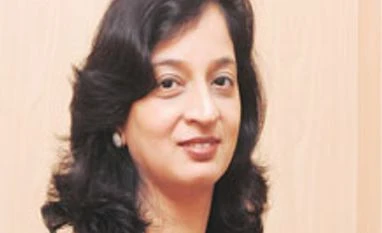 "The markets could correct by 10% if we don't get a stable govt: Jyoti Vaswani")

