
Punjab farmers continue to burn stubble, say govt has not provided aid
A farmer named Kanwar added, "It is not the stubble which is burning, it is also the 'arthi' (corpse) of the promises of the government.
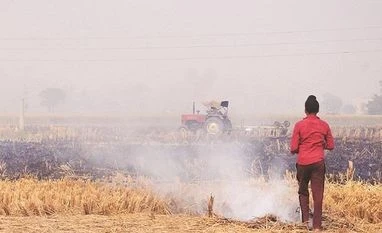 "Punjab farmers continue to burn stubble, say govt has not provided aid")
Explore Business Standard
A farmer named Kanwar added, "It is not the stubble which is burning, it is also the 'arthi' (corpse) of the promises of the government.
Amid the rising levels of pollution in Delhi, stubble burning continues in various parts of Amritsar, with farmers alleging that the government has done nothing in regards to providing machinery and compensation for controlling the burning of stubble.
Gopi, a farmer said while talking to ANI, "We are helpless. The government has not provided us with compensation of Rs 7,000 and machinery needed to control stubble burning. If we would not burn the stubble, our next crop will be late. Our crops are not being brought at MSP rates. Even the Supreme Court has said that farmers only cannot be blamed for pollution as industries and vehicles cause pollution in Delhi."
Another farmer named Kanwar added, "It is not the stubble which is burning, it is also the 'arthi' (corpse) of the promises of the government. Nothing is being done on the ground and everything exists only on paper. We are helpless. If we think about not burning stubble and the promises of the government, we will not be able to go ahead with our next crops."
Stubble burning is a process of setting on fire the straw stubble, left after the harvesting of grains, like paddy, wheat, etc. The process of burning farm residue is one of the major causes of air pollution in parts of north India, deteriorating the air quality around this time of the year. Combing with vehicular emission, it adversely affects the Air Quality Index (AQI) in the national capital.
As of 10:40 PM on Sunday, the Air Quality Index is in 'Very Poor' Category. According to the government agencies, an AQI between 0-50 is considered good, 51-100 is satisfactory, 101-200 moderate, 201-300 poor, 301-400 very poor and 401-500 are marked as severe/hazardous.
To tackle increasing air pollution levels in the national capital, Delhi Chief Minister Arvind Kejriwal on Saturday announced a 'pollution lockdown' under which the schools would remain physically closed for a week from this Monday.
All construction activity in the national capital has been shut down from November 14 to November 17, he added.
Government office employees will be asked to operate from home (WFH) at 100 per cent capacity for a week, while private offices will be issued an advisory to go for WFH (work from home) option as much as possible, stated the Chief Minister.
(Only the headline and picture of this report may have been reworked by the Business Standard staff; the rest of the content is auto-generated from a syndicated feed.)
First Published: Nov 15 2021 | 8:20 AM IST

