About 'termites' and Donald Trump

Where would Trump have been if his parents, grandparents and wives too had rejected the ideology of globalism and embraced the doctrine of patriotism?
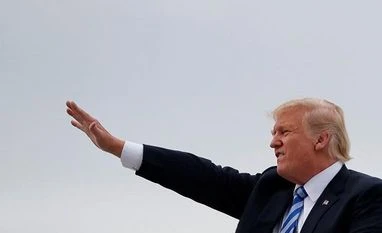
Donald Trump
File photo of Donald Trump. Photo: Reuters
Sunanda K Datta-Ray
Last Updated : Sep 28 2018 | 11:11 PM IST
It wasn’t at all surprising that the packed United Nations General Assembly heard Donald Trump’s attack on globalisation — which he called “globalism” like the Americans called non-alignment “neutralism” — in stony silence. In India, he would have been howled down. Or, perhaps, not. We are such experts at dissimulation that it is quite likely that the very people who queued every day for H1B visas would in his presence heartily endorse everything Trump said in New York about staying at home to build up the country.

Foreigners quickly detect this duplicity. “When I call on cabinet ministers, the president, or governors, they all love to talk about their sons, sons-in-law and daughters in the United States and how well they’re doing and how well they like things,” noted William B Saxbe, the American ambassador to New Delhi in the 1970s. “The next day I read in the papers the very same people are denouncing the United States as a totally different kind of country.”

Migration is not a subject on which many Afro-Asians are honest or objective. Many of the 84 heads of state and 44 heads of government who listened to Trump on Tuesday would count among their citizens the hundreds of thousands of Afro-Asians who are either hammering at the European Union’s Greek door or risking (and losing) their lives in leaky tubs that should never be allowed to attempt to cross the Mediterranean. Those kings, presidents and prime ministers packed in the UN’s green malachite hall would never admit that the search for better living conditions is migration’s main impetus.

That applies as much to the Nobel Laureate academic at a hallowed institution as to a street-corner sweeper. Both are emigrants who have sought and found abroad the comforts the motherland denied them. Some try to camouflage this uncomfortable truth by ponderously pontificating on migration as being a civilisational phenomenon. Or they claim a justifying a mission — like Indian doctors saving Britain’s National Health Service. A few try to submerge themselves totally in a newly acquired identity.  

Occasionally, someone like Amit Shah, the Bharatiya Janata Party president, and some far right politicians in the West, seek comfort in applying double standards to different migrants. Presumably, Shah did not look on as “termites” the hundreds of thousands of Gujarati shopkeepers and small traders whom the natives of the old Kenya, Uganda and Tanganyika resented so deeply? Rightly or wrongly, they were blamed for standing aloof from Africans whom they exploited, and for trying to identify with the British.  

When indigenous regimes threw out Gujaratis who had gone to East Africa on the colonial bandwagon, they could have returned to the motherland where their capital, skills and undoubted capacity for hard work would have been invaluable assets in India’s development. Instead, they begged and pleaded with an extremely reluctant Britain to let them in. Instead of encouraging them to return to India, Indira Gandhi’s government stupidly backed their demand. It was determined to punish Britain, not realising that meant cutting India’s own nose to spite its face. 

Those Gujarati immigrants — now numbering more than 620,000 — include millionaires, peers of the realm and about half of the ethnic Indian members of parliament. These were the people behind the Wembley Stadium extravaganza when Narendra Modi visited Britain in 2015. Like fellow Gujaratis in the US or Singapore, those who prospered (as they do everywhere!) in Britain never hesitate to help the BJP.  Would Shah still call them termites?

Some speakers don’t appreciate how delicately they themselves are placed. Queen Elizabeth, whose uncle, Edward VIII, boasted he didn’t have a drop of English blood in his veins, never mentions migration. But speaking in Sweden earlier this month, the Dalai Lama was less astute. He may even have provided Trump his cue by saying that refugees should “ultimately develop their own country” because “Europe belongs to Europeans”.

Where does that leave the 45th US president? He is the son and grandson of immigrants: German on his father’s side — not Swedish, as he likes to say — and Scottish on his mother’s. None of his grandparents, and only one of his parents, was born in the US or spoke English as their mother tongue. His mother’s parents came from the remote Gaelic-speaking Outer Hebrides. Of his three wives, one was born in Czechoslovakia and one in Slovenia.

Where would Trump have been if they, too, had “rejected the ideology of globalism and embraced the doctrine of patriotism”?

One subscription. Two world-class reads.

Already subscribed? Log in

Subscribe to read the full story →
*Subscribe to Business Standard digital and get complimentary access to The New York Times

Smart Quarterly

₹900

3 Months

₹300/Month

SAVE 25%

Smart Essential

₹2,700

1 Year

₹225/Month

SAVE 46%
*Complimentary New York Times access for the 2nd year will be given after 12 months

Super Saver

₹3,900

2 Years

₹162/Month

Subscribe

Renews automatically, cancel anytime

Here’s what’s included in our digital subscription plans

Exclusive premium stories online

  • Over 30 premium stories daily, handpicked by our editors

Complimentary Access to The New York Times

  • News, Games, Cooking, Audio, Wirecutter & The Athletic

Business Standard Epaper

  • Digital replica of our daily newspaper — with options to read, save, and share

Curated Newsletters

  • Insights on markets, finance, politics, tech, and more delivered to your inbox

Market Analysis & Investment Insights

  • In-depth market analysis & insights with access to The Smart Investor

Archives

  • Repository of articles and publications dating back to 1997

Ad-free Reading

  • Uninterrupted reading experience with no advertisements

Seamless Access Across All Devices

  • Access Business Standard across devices — mobile, tablet, or PC, via web or app

More From This Section

Disclaimer: These are personal views of the writer. They do not necessarily reflect the opinion of www.business-standard.com or the Business Standard newspaper
Next Story



