Making green hydrogen work

India needs a more comprehensive approach
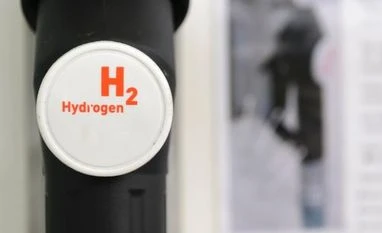
Hydrogen auto fuel
Hydrogen auto fuel
Business Standard Editorial Comment Mumbai
3 min read Last Updated : Feb 21 2022 | 11:34 PM IST
India has made a start in clean hydrogen production, joining 30 other nations that are developing hydrogen strategies. A new green hydrogen and green ammonia policy envisages building a prominent role for clean fuels in the country’s fossil fuel-dominated energy mix. The policy offers some concessions on inter-state electricity transmission charges, something that some stakeholders say can halve the current costs of producing green hydrogen. Much of the policy, however, deals with ease of doing business, including grid connectivity, time-bound access to the grid, and single window clearances — things that are par for the course in developed countries. The policy is designed to meet the output target of 5 million tonnes of green hydrogen by 2030 from nil now.

The policy is also geared towards the supply side, meaning production of green hydrogen. However, there is little in the policy to create demand for the fuel. There is a chicken-and-egg problem in building out the necessary infrastructure for hydrogen. Without demand, investments remain too risky for wide-scale production that could reduce costs, but without economies of scale the technology remains too costly. The policy, thus, requires incentives for industries to buy green hydrogen, without which private sector participation may be limited. The International Renewable Energy Agency estimates hydrogen to cover up to 12 per cent of global energy use by 2050. Hydrogen is the lightest, most abundant element, and the cleanest burning fuel. It can be produced from coal or by getting natural gas to react with steam (called grey hydrogen), or by using solar and wind electricity to split water in a process called electrolysis (called green hydrogen). Hydrogen can be used in refineries, steel-making, power generation, and transport, or to produce synthetic fuels such as methanol, diesel, and jet fuel. The investment potential in this area is significant. Global sales of hydrogen could be worth $600 billion, and the value chains of green hydrogen could become a $11.7-trillion investment opportunity by 2050. Governments led by France, Germany, and Japan have allocated at least $65 billion in support for clean hydrogen.
 
Missing in the policy is what it takes to produce and store green hydrogen, namely cheap electrolysers and fuel cells, which will help India bring down green hydrogen costs to $1-1.50/kg. Electrolysers may be a $60-billion market and fuel cells another $25 billion. For instance, India will need 20-30 Gw of electrolyser capacity to meet its hydrogen targets while the global electrolyser capacity is just over 0.3 Gw, projected to rise to 16 Gw by 2024. Europe and Japan account for the vast majority of patents in hydrogen production and fuel cells, respectively. China produces the cheapest electrolysers. Fuel cell systems are used from electric vehicles to large-scale installations providing electricity directly to the grid. They can be deployed to optimise renewable energy storage, serving as an alternative for batteries. Much more needs to be done if India wants to gain a foothold in the rapidly growing green hydrogen market, which not only ensures energy security but also creates opportunities for India to become a manufacturing powerhouse for hydrogen equipment and new technologies — in the absence of which it may end up depending on imports again to meet hydrogen goals.

One subscription. Two world-class reads.

Already subscribed? Log in

Subscribe to read the full story →
*Subscribe to Business Standard digital and get complimentary access to The New York Times

Smart Quarterly

₹900

3 Months

₹300/Month

SAVE 25%

Smart Essential

₹2,700

1 Year

₹225/Month

SAVE 46%
*Complimentary New York Times access for the 2nd year will be given after 12 months

Super Saver

₹3,900

2 Years

₹162/Month

Subscribe

Renews automatically, cancel anytime

Here’s what’s included in our digital subscription plans

Exclusive premium stories online

  • Over 30 premium stories daily, handpicked by our editors

Complimentary Access to The New York Times

  • News, Games, Cooking, Audio, Wirecutter & The Athletic

Business Standard Epaper

  • Digital replica of our daily newspaper — with options to read, save, and share

Curated Newsletters

  • Insights on markets, finance, politics, tech, and more delivered to your inbox

Market Analysis & Investment Insights

  • In-depth market analysis & insights with access to The Smart Investor

Archives

  • Repository of articles and publications dating back to 1997

Ad-free Reading

  • Uninterrupted reading experience with no advertisements

Seamless Access Across All Devices

  • Access Business Standard across devices — mobile, tablet, or PC, via web or app

Topics :hydrogenBusiness Standard Editorial Commentclean energy

Next Story



