No-nonsense industrialist

Rahul Bajaj was a rare India Inc voice
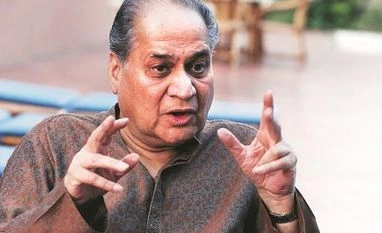
Rahul Bajaj
Rahul Bajaj
Business Standard Editorial Comment Mumbai
3 min read Last Updated : Feb 14 2022 | 1:29 AM IST
One of the wry jokes about India Inc was its penchant for double-speak, fulsomely praising the government in public but bitterly criticising it off the record. Rahul Bajaj, who died on February 12 at age 83, was not one of them. Throughout his long innings, from a businessman competing in shifting policy landscapes to his emergence as a grey eminence of Indian business, Bajaj could be depended on for a forthright opinion regardless of the party in power. His antecedents as a scion of a storied business family with links to the freedom struggle may have offered some safeguard but it is also true that Bajaj built his business in the thick of the licence-permit raj with all its absurdities. In an interview to Business Standard in 2014, he recalled how he was pipped to the post for the first industrial licence for two-wheelers by Chennai-based M A Chidambaram. Bajaj said Chidambaram won the licence after then Industry Minister T T Krishnamachari ordered him to tie up with Italy’s Lambretta. Bajaj, who had tied up with Piaggio, had to wait two years for his turn. That the iconic Chetak then went on to become a bestselling brand with a huge open-market premium and a 10-year wait list in its heyday is testimony to his business acumen.

By the early 1970s, he was able to convince the Monopolies and Restrictive Trade Practices Commission, which had summoned him for capacity violations, to allow him to expand. Bajaj is famed for his leadership of the “Bombay Club”, the informal grouping of 14 family-owned conglomerates which opposed the sharp lowering of import tariffs following the 1991 Budget. Today, most of these scions insist the club never existed, except Bajaj; he claimed that all the others kept quiet after the finance ministry asked them to do so. But he did not pull his punches with the current government either. At a public meeting with senior politicians in 2019 he spoke openly about “this environment of fear”.

Bajaj’s imposing personality and earthy wit deflected attention from the fact that he was an Indian businessman in every sense of the term, at once patriarchal and pragmatic. By his own admission, he resisted several tie-ups to make cars because they implied a weakening of his management control. In the early 2000s, a family feud over ownership and control of the group’s sugar, cement, and consumer businesses with his brother ended after six years of a very public trading of charges. The lesson Bajaj learnt was to split his two-wheeler and finance companies between sons Rajiv and Sanjiv, respectively, well before his death. Both have taken their companies to new heights. Rajiv’s decision to exit scooters —made against his father’s advice —and move into motorcycles has paid off handsomely as has his focus on exports, which now account for about 40 per cent of revenues. But as a group, the finance businesses still account for the bulk of the turnover, just as they did under Bajaj. He leaves behind a successful corporate legacy but one that remains family-controlled and conservative, even though he himself was very much one of a kind.

One subscription. Two world-class reads.

Already subscribed? Log in

Subscribe to read the full story →
*Subscribe to Business Standard digital and get complimentary access to The New York Times

Smart Quarterly

₹900

3 Months

₹300/Month

SAVE 25%

Smart Essential

₹2,700

1 Year

₹225/Month

SAVE 46%
*Complimentary New York Times access for the 2nd year will be given after 12 months

Super Saver

₹3,900

2 Years

₹162/Month

Subscribe

Renews automatically, cancel anytime

Here’s what’s included in our digital subscription plans

Exclusive premium stories online

  • Over 30 premium stories daily, handpicked by our editors

Complimentary Access to The New York Times

  • News, Games, Cooking, Audio, Wirecutter & The Athletic

Business Standard Epaper

  • Digital replica of our daily newspaper — with options to read, save, and share

Curated Newsletters

  • Insights on markets, finance, politics, tech, and more delivered to your inbox

Market Analysis & Investment Insights

  • In-depth market analysis & insights with access to The Smart Investor

Archives

  • Repository of articles and publications dating back to 1997

Ad-free Reading

  • Uninterrupted reading experience with no advertisements

Seamless Access Across All Devices

  • Access Business Standard across devices — mobile, tablet, or PC, via web or app

Topics :Rahul BajajBusiness Standard Editorial Comment

Next Story



