Questions about the LAC

Govt must desist from airbrushing facts
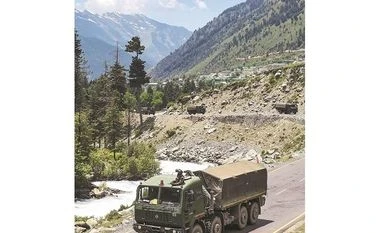
Indian army, convoy, border, kashmir, china, pakistan
Business Standard Editorial Comment
3 min read Last Updated : Jun 18 2020 | 12:09 AM IST
The brutal killing of 20 Indian soldiers in a clash with forces of the People’s Republic of China along the Line of Actual Control (LAC) is a dangerous and worrying development. Both countries must now work towards de-escalating the situation by activating all political and diplomatic lines of communication so that differences do not become a full-scale confrontation. Admittedly, it will be a long haul as the clash follows weeks of a stand-off in the disputed parts of Ladakh. Neither the Indian nor the Chinese authorities have made any direct claims about the number of Chinese soldiers who were killed in the clash, though government-linked media in Beijing has said that there were casualties on both sides. Crucially, the Chinese foreign ministry has claimed both, that the clashes occurred on “its” side of the LAC, and that the entire Galwan Valley has “always” been a sovereign part of China. There are very real concerns that this indicates that the People’s Liberation Army (PLA) has successfully changed the facts on the ground in that valley.

Put together, it has begun to appear that the true picture of events so far has not been revealed to the Indian people. The government and those speaking on its behalf have claimed that the PLA soldiers, after initially pitching tents on the Indian side of the line in the Galwan area, had retreated to their side of the LAC. That does not seem to be the case, or the fracas of June 15/16 night could not have happened. The problem with airbrushing the facts is that, if the real facts emerge, the government loses credibility and then people start wondering what else is being hidden or covered up. No one expects the government to be negotiating with the Chinese in public glare, and full disclosure could also reduce the government’s room for negotiating flexibility, thus locking it into unsustainable public stances as happened in the run-up to 1962, when correspondences with Beijing were released to Parliament. So discretion on what is disclosed and when is only to be expected; but discretion is different from dissembling; whatever is stated must be true. The government must publicly clarify the seriousness of the situation at the LAC, and build consensus around its plans for a firm pushback. 

In the last confrontation with the PLA, at Doklam, the Indian Army had a positional advantage. The only time India had the first-mover advantage was in the Siachen area, which helped it claim and then hold on to the Saltoro heights above the glacier. The current situation is more reminiscent of the Kargil conflict, in which the Pakistani army thought it could steal a march on the heights. Pakistan could be handled militarily and diplomatically, but China is another cup of tea. Getting it to move out of territory that it has captured is going to be far more difficult, and cannot be done without some quid pro quo, whether publicly disclosed or not. The issue of concern now is why the Indian Army was caught by surprise in both instances. At some point, this question will have to be asked and answered. If people were caught napping, then action must be taken against them.

One subscription. Two world-class reads.

Already subscribed? Log in

Subscribe to read the full story →
*Subscribe to Business Standard digital and get complimentary access to The New York Times

Smart Quarterly

₹900

3 Months

₹300/Month

SAVE 25%

Smart Essential

₹2,700

1 Year

₹225/Month

SAVE 46%
*Complimentary New York Times access for the 2nd year will be given after 12 months

Super Saver

₹3,900

2 Years

₹162/Month

Subscribe

Renews automatically, cancel anytime

Here’s what’s included in our digital subscription plans

Exclusive premium stories online

  • Over 30 premium stories daily, handpicked by our editors

Complimentary Access to The New York Times

  • News, Games, Cooking, Audio, Wirecutter & The Athletic

Business Standard Epaper

  • Digital replica of our daily newspaper — with options to read, save, and share

Curated Newsletters

  • Insights on markets, finance, politics, tech, and more delivered to your inbox

Market Analysis & Investment Insights

  • In-depth market analysis & insights with access to The Smart Investor

Archives

  • Repository of articles and publications dating back to 1997

Ad-free Reading

  • Uninterrupted reading experience with no advertisements

Seamless Access Across All Devices

  • Access Business Standard across devices — mobile, tablet, or PC, via web or app

Topics :Ladakh standoffIndia-China border disputePeople’s Liberation ArmyIndian Army

Next Story



