Air pollution has become a way of life for people in Delhi NCR. The capital is under a blanket of thick haze, as pollution levels have breached the permissible levels and the real-time pollution monitors are displaying alarmingly high concentrations of PM 2.5 and PM 10 particles. Smog-like conditions, accentuated by a drop in temperature and an increase in contaminants in several parts of India, have led to declining air quality. Indoor air contains microbes and dust particles including the tiny PM 2.5 that can seriously affect our health, creating allergy-related problems, flu to a host of other serious conditions.
According to a report by the World Health Organization (WHO), 14 out of 15 most polluted cities in the world are in India. In the wake of the alarming air pollution levels, owning an air purifier has become a necessity. Says Rajneesh Sharma, Business Head–Personal Care Appliances & Air Purifiers, Panasonic India: "With air purifiers, people can at least inhale fresh air at home. Installing air purifiers in your homes and offices may, to some extent, help combat the impact of deadly air on your respiratory and circulatory systems." However, not getting hold of the right air purifier might just worsen the scenario.
Though expensive, a good quality air purifier filters out pollutants such as bacteria, viruses, volatile organic compounds, and odours. According to industry experts, air purifier sales have jumped by up to 25-30 per cent. Says Mahesh Gupta, chairman, KENT RO Systems: "It has become crucial, especially for houses with senior citizens and children under the age of two, or those with lung-related ailments." Although most basic HEPA (high-efficiency particulate air) air purifiers can remove at least some of the pollution, only a few are specially designed to get the whole job done.
Look out for these specifications, before you buy an air purifier.
Size of the room: The first and foremost point to be considered is the size of the room, in square meters, in which we want to install the air purifier. Says Sharma, "Choose an air purifier meant for a room size bigger than yours. It is also important to consider the height of your room while making a choice." Most portable air purifiers cater only to one room. The cost of electricity and of replacing the air filter should be kept in mind. Experts suggest air purifiers should always be kept running for best results.
Check the type of filters: The quality and type of filter determine the effectiveness of an air purifier. Specific filters target different components of the air. There are two types of air filters -– HEPA Composite and Composite Air Filter. The most commonly available filter type is HEPA (High-Efficiency Particulate Air). It can filter up to 99.9 per cent of airborne particles of small sizes (up to 0.3 microns). Replacing your air filters depends on a number of factors such as frequency of usage, default indoor air quality, water quality, and filter type. Adds Gupta, "For a typical HEPA air purifier, the filter, which costs around Rs 3,500, should be replaced every one to two years."
Size and weight: Though it is the most neglected part, portability of the air purifier should be considered while buying one. According to experts, it is better to go for a lightweight air purifier.
Performance: The performance of a particular air purifier model is rated by its coverage area and Clean Air Delivery Rate (CADR). This is something you should ask the seller before buying. Also, note the noise levels of the air purifier. Those with loud noise can disturbing sleep if the fan is at full speed.
Technology and price: While air purifiers come with packed features these days, opt for one that is equipped with technology catering to your needs. Adds Sharma, "Air purifiers also come with running costs associated with it. The hourly cost is about thirty paise per half unit used, as per current statistics."
With plenty of options available in the marketplace today, it is essentially important to understand what fits your requirements. Kent RO's recent launch KENT ALPS Plus air purifier, priced at Rs 12,999, comes with a display monitor that indicates particulate levels in the air. KENT also offers a car air purifier that ranges between Rs 10,000-20,000, depending on the type of vehicle. The air purifier range from Philips starts at Rs 13,000. The Dyson wifi-enabled tower air purifier is priced at Rs 35,000.
Face masks
You don't really need one if you have an air purifier at home, and stay indoors most of the time. But if you step outside often, it can be quite useful. Though they are not very comfortable to wear, the N95 and N99 are the ones most recommended. They filter out almost 95 per cent of PM 2.5. Other popular options are the less expensive surgical masks. They filter out only 40-50 per cent of pollutants.
Then there is the NasoFilter. Created by an IIT graduate, this new technology prevents 90 per cent of particulate matter from entering the nose. One strip costs Rs 10 and lasts one day.
| Prices of HEPA air purifiers |
| Brand | Model | Price (Rs) |
| Panasonic | F-PXM55AAD | 20,652 |
| F-PXH55MWU(D) | 26,500 |
| F-VXM35AAD | 18,999 |
| Kent | Aura | 15,990 |
| Alps | 21,990 |
| Eternal | 21,990 |
| Alps Plus | 25,000 |
| Philips | Air Cleaner | 32,995 |
| Air Purifier | 49,995 |
| Eureka Forbes Aeroguard | Wave | 15,999 |
| SCPR700 | 24,000 |
| SCPR1100 | 38,000 |
| Source: Companies |

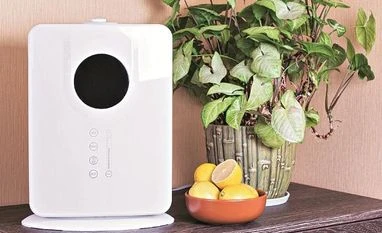 "Choose the right air purifier to help protect yourself from pollution")












 Connect with us on WhatsApp