
Air pollution: 40% Delhi-NCR residents want to move to other cities
The survey with over 17,000 respondents from Delhi and NCR region has found that 13 per cent resident believe that they have no option but to cope with rising pollution levels
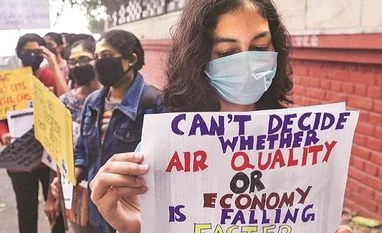 "Air pollution: 40% Delhi-NCR residents want to move to other cities")
Explore Business Standard
The survey with over 17,000 respondents from Delhi and NCR region has found that 13 per cent resident believe that they have no option but to cope with rising pollution levels
Over 40 per cent residents of Delhi and NCR want to move to another city because of bad air quality while 16 per cent want to travel during the period, according to a new survey.
The survey with over 17,000 respondents from Delhi and NCR region has found that 13 per cent resident believe that they have no option but to cope with rising pollution levels.
Over 40 per cent residents said they would like to leave Delhi NCR and move somewhere else while 31 pc said they would stay in Delhi NCR and would equip themselves with air purifiers, masks, plants etc, according to findings of the survey done by online platform LocalCircles.
While 16 per cent people said they would stay in Delhi NCR but travel during this period of toxic pollution, 13 pc said they would stay here and have no option but to cope with rising pollution levels, it added.
When asked, how the pollution affected them and their family in the past week, 13 per cent respondents said one or more of them have visited a hospital already while 29 per cent said one or more of them have visited a doctor already.
44 per cent respondents said they were having health problems related to pollution but have not visited a doctor or hospital and only 14 pc people said they have had no impact of pollution on their health, according to the survey.
The air quality in Delhi remained under severe category despite some parts of the city receiving rain on Sunday morning.
As per Central Pollution Control Board(CPCB) data, the air quality index(AQI) of Delhi was 486 at 11 AM. Higher levels of AQI were reported from Pusa (495), ITO (494), Mundka (493) and Punjabi Bagh.
On Friday, the Supreme Court-mandated Environment Pollution (Prevention and Control) Authority declared a public health emergency, following which the Delhi government decided to shut all schools.
The EPCA also banned construction activities in Delhi-NCR till November 5. The odd-even vehicle rationing scheme of Delhi government will roll out from Monday.
An AQI between 0-50 is considered 'good', 51-100 'satisfactory', 101-200 'moderate', 201-300 'poor', 301-400 'very poor' and 401-500 'severe'. Above 500 falls in the 'severe plus' category.
First Published: Nov 03 2019 | 12:55 PM IST

