Govt to pass on benefit to consumers if oil prices rise
Petroleum Minister said they have passed 50% revenue to consumers, saving remaining to balance fiscal deficit and for welfare schemes of the country
Press Trust of India New Delhi Justifying its decision to hike excise duty on petro products when their prices were low, Government said Monday it may pass the benefit of this "cushion" of earning to the consumers if there is a spectacular hike in the prices.
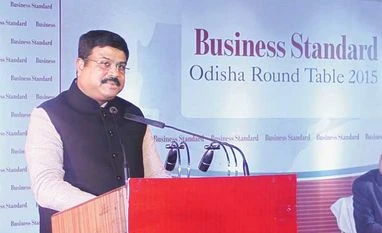
"Today, I am assuring this House, if there is a spectacular hike in the prices of crude oil, the Government may decide to pass on this benefit of increase in excise duty to the consumers," Petroleum Minister Dharmendra Pradhan said in Lok Sabha during Question Hour.
Read more from our special coverage on "OIL"
He said after de-regulation of diesel and petrol, the companies were taking decisions on their own, but if at any point of time there is a hike in the prices of crude oil, the Government should have a cushion to pass on the benefit in those days of crisis.
The Minister said there have been allegations that the Government is keeping the money earned through excise duty in the treasury, which is "half truth".
"Let me put a bare fact in this august House. Since the last one and a half years, we can say, out of the amount we saved or we earned through this crude oil downslide, we have passed on 50% to the consumer.
"We have decreased the price 24 times on petrol and 18 times on diesel; that is 50%. As regards the other half, we have kept that money to balance fiscal deficit and for the welfare schemes of the country," he said.
Pradhan said after the decision of the 14th Finance Commission, 42 per cent of that saving has to be shared with States. Apart from that, a number of States have increased VAT on petroleum products.
"The States and the Centre have to carry out a number of welfare schemes and developmental schemes. So we have to decide whether we should not have good roads. Should the Union Government not provide drinking water to poor man in the countryside ? Should this Government not be committed to provide irrigation facilities in the paddy fields?" he said.
"But where do we get money? We have shared 42% of this money with the States as per recommendation of the 14th Finance Commission. This is a welfare state. Our Government is committed to cooperative federalism. We will share the revenue with States and some portion will go to the consumers indirectly through welfare activities," he said.

 "Govt to pass on benefit to consumers if oil prices rise")

