Non-disclosure of overseas assets will become a "very risky affair" from 2017 as government will by then start getting information on them from foreign countries, Minister of State for Finance Jayant Sinha said today.
Addressing the sixth meeting of the Group on Automatic Exchange of Information (AEOI), he said the CBDT has constituted a 'Information Security Committee' to ensure confidentiality of data received from foreign countries.
"Non-disclosure of foreign assets will increasingly become a very risky affair for tax payers... Strict bank secrecy has ended, and a new environment of transparency is now operational," Sinha said.
He said steps are being taken to put in place a robust information security mechanism in the Income Tax department by constituting the Committee at the level of CBDT and local information security commission at cadre control and through issuance of guidelines.
The tax department will come up with a revised guidance note of AEOI before December 31, 2015. It will provide guidance to financial institutions, regulators and tax department officers for ensuring compliance as per AEOI norms.
"The Income Tax rules and guidance notes are formulated taking into consideration requirements of both Common Reporting Standards and Foreign Account Tax Compliance Act (FATCA)," he said.
Sinha said the problem of offshore tax evasion and flow of illicit money can be addressed only by the free flow of financial account information exchange amongst countries on an automatic basis.
"India is an early adopter of Common Reporting Standard and committed to adopting it by 2017. We have taken a number of new steps to implement the standards so that we can transmit the first information related to calendar year 2016 to treaty partners in September 2017," he added.
India has started receiving information through AEOI route under FATCA from USA since September 30. Further, under the multilateral agreement India will start receiving information from other countries under AEOI route from 2017 onwards.
As on March 18, 58 jurisdictions (including India) have
committed to share information under AEOI by 2017. A further 36 jurisdictions have committed to share by 2018, including those which have beneficial tax regime.
Sinha said over 100 countries are participating in the two day global forum of AEOI Group and the meeting would work towards ensuring confidentiality provisions associated with the automatic exchange are fully understood by jurisdictions.
This, he said, will ensure that "there is commonality and clear understanding of how this confidentiality provisions are being put in place".
The group would also discuss automatic and seamless exchange of information under the common reporting standards.
Sinha said India is now included on the published list of countries which the US considers to be adequate for exchange of information on automated basis. There are 34 such countries on the list.
As regards steps to curb terror funding, Sinha said the tax department has surveillance on the financial flows coming into the country. "If we feel that there is reason for suspicion then we monitor it closely," he said.
He said to check the menace of domestic black money, the Know Your Customer (KYC) norms have been made strict and ensuring KYC helps getting information about suspicious transactions.
Sinha said in the long term the aim should be to move towards a cashless economy, so that there is surveillance on financial transactions and flows and that would help curb circulation of black money.
Central Board of Direct taxes (CBDT) acting chairman A K Jain said the AEOI is a game changer and its implementation would make the future of information exchange much brighter and better.
"Government and CBDT are fully conscious that menace of domestic black money needs to be addressed," Jain said, adding that the tax department has the annual information returns of assessess and other information necessary to detect black money.
"Tax offices are increasingly getting information from domestic and overseas sources. Such information is used to make better assessment and profile of assesses," he said.
Jain said India has taken steps to implement AEOI and is conscious of the issue of confidentiality.
CBDT has taken steps to ensure information security. US has reviewed it and found it to be completely safe under FATCA, he said.

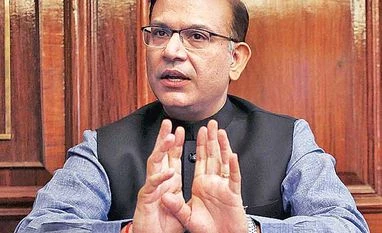 "Non-disclosure of overseas assets to become 'risky affair' from 2017, warns Jayant Sinha")


