US President Barack Obama today signed a bill to ban the import of goods like fish, electronics and cocoa produced by forced labour, closing a legal loophole in an 85-year-old law that has failed to keep such products out of America.
Shipments derived from slavery will be kept out of the country under the new law that closes a legal loophole that allowed import of goods derived from forced labour if US demand exceeded domestic production, officials said.
The measure closing the loophole from the Tariff Act of 1930 was included in a wider trade enforcement bill which was signed by Obama.
The International Labour Organisation estimates that 20.9 million people are victims of forced labour globally.
The illegal industry is estimated to generate $150 billion in profits per year.
Testifying before the Senate Foreign Relations Committee, Maurice Middleberg from 'Free the Slaves' said forced and child labour is prevalent in India too.
Middleberg said he and his colleagues entered a tiny hamlet in northern India during his just concluded trip.
The villagers were members of a low caste group, he said, adding that the dwellings were made of cow dung, mud and thatch and had dirt floors. Running water and sanitation were unknown.
There was no school for the children and almost no access to healthcare. Their meager possessions consisted of a few tools, some hand-made cots, some chickens and a water buffalo, he said.
"Every member of the community supposedly owed debts to the landlord on whose property they lived. The typical path to slavery is that an impoverished family encounters a moment of crisis, most often illness in the family. Debts are incurred to pay for health care or other emergency needs," Middleberg said.
"In the absence of cash, the creditor demands free labour. Lies, ruses, coercion and violence are used to hold people on the farm, in the mine or in a factory. The entire family is held liable for the debt, which is passed down from one generation to the next. Children grow up knowing nothing but enslavement," he said.
"To speak to the people in the community, we were obliged to hide in the nearby forest. We were told that the villagers would be beaten if the landlord or his agents saw them speaking to us, Middleberg told members of the Senate Foreign Relations Committee during a Congressional hearing.

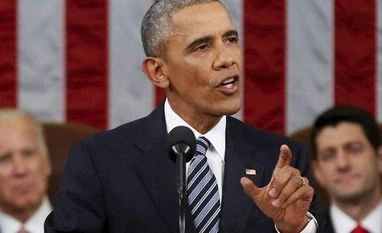 "President Obama bans US import of products made by forced labour")


 Connect with us on WhatsApp