
Personal insolvency beginning of a 'new learning': IBBI chief M S Sahoo
"We intend to move in a phased manner to cover insolvency of partnership and proprietorship firms and other individuals," he said.
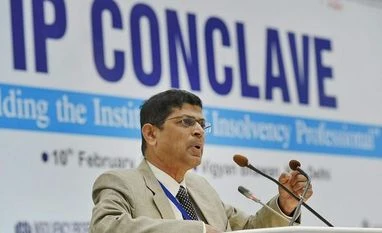 "Personal insolvency beginning of a 'new learning': IBBI chief M S Sahoo")
WebinarsNew
Deep DiveNew
Explore Business Standard
"We intend to move in a phased manner to cover insolvency of partnership and proprietorship firms and other individuals," he said.
Personal insolvency framework will be the "beginning of a new learning" and the next big thing in insolvency reforms, IBBI chief M S Sahoo has said.
Starting with a small set of individuals, the framework under the Insolvency and Bankruptcy Code (IBC) for personal guarantors to corporate debtors has come into force from December 1.
Sahoo, Chairperson of the Insolvency and Bankruptcy Board of India (IBBI), emphasised that insolvency resolution of personal guarantors complements insolvency resolution of corporate debtors.
"It (personal insolvency) is the next big thing in insolvency reforms. It will be beginning of a new learning," he told PTI in a recent interview.
In the last three years, Sahoo said it was learning about corporate insolvency and in the next three years, "we will invest in learning personal insolvency".
The IBC came into effect from December 2016.
"We intend to move in a phased manner to cover insolvency of partnership and proprietorship firms and other individuals," he said.
Under the IBC, individuals are classified into three classes -- personal guarantors to corporate debtors, partnership firms and proprietorship firms, and other individuals.
"There are occasions when a corporate debtor takes a loan guaranteed by another corporate person (corporate guarantor to the corporate debtor) or an individual (personal guarantor to the corporate debtor).
"The lender may pursue a remedy against the guarantor or the corporate debtor, being principal borrower, when there is a default in repayment of the loan," Sahoo said.
As per the IBC, where an application for insolvency resolution or liquidation proceeding of a corporate debtor is pending before the National Company Law Tribunal (NCLT), an application related to insolvency resolution or liquidation or bankruptcy of a corporate guarantor or a personal guarantor can also be filed before the tribunal.
"... insolvency resolution, liquidation or bankruptcy proceeding of a corporate guarantor or a personal guarantor of the corporate debtor pending in any court or tribunal shall stand transferred to the NCLT dealing with insolvency resolution or liquidation proceeding of such corporate debtor," the Corporate Affairs Ministry had said in a release in November.
First Published: Dec 01 2019 | 4:15 PM IST


 Connect with us on WhatsApp