SC refers petition on homosexuality to CJI's bench
In a plea, some celebrities had claimed to be part of the LGBT community, seeking quashing of section 377 of the IPC
Press Trust of India New Delhi The Supreme Court on Wednesday referred the plea of some celebrities, who claim to be part of the LGBT community, seeking quashing of section 377 of the IPC which criminalises homosexuality in the country, to a bench already seized of the matter.
A bench comprising Justices S A Bobde and Ashok Bhushan said the matter will be listed before a bench headed by the Chief Justice of India for appropriate orders.
During the hearing, senior advocate Arvind Datar said the plea should be tagged along with the curative petition pending in the court.
The bench then said it could be mentioned before the bench headed by Chief Justice T S Thakur.
"Let the matter be listed for the Chief Justice for appropriate orders," the bench said.
The celebrities including chef Ritu Dalmia, hotelier Aman Nath and dancer N S Johar, in their plea had sought protection of their sexual rights on the ground that it is an integral part of the fundamental right to life.
The gay celebrities said their lives have been "inexorably constricted and their rights infringed" by the penal provision.
Earlier, a bench headed by Chief Justice T S Thakur had agreed to hear in an open court the curative plea of NGO 'Naz Foundation' and some gay rights activists.
On February 2, the court referred the curative plea to a five-judge Constitution Bench for re-examination of the 2-year old verdict by which a colonial law, criminalising consensual sexual acts between same sex under section 377, was restored.
The curative plea was filed against dismissal of their petition seeking a review of the 2013 judgement of the apex court upholding the validity of section 377 (unnatural sexual offences) of IPC.
Now, the gay celebrities have filed a fresh writ petition to quash the penal provision.
Naz Foundation had filed a petition in December 2001 in the Delhi High Court, which had on July 2, 2009,decriminalised Section 377.
After refusing twice to entertain the pleas against Section 377, the SC had on February 2 referred the issue to a five-judge bench.
The apex court had earlier dismissed a batch of review petitions filed by the Centre and gay rights activists against its December 2013 verdict declaring gay sex an offence punishable up to life imprisonment.
The court had said it did not see any reason to interfere with the December 11, 2013 verdict. It had also rejected the plea for oral hearing on review petitions which are normally decided by judges in-chamber without giving an opportunity to parties to present their views.
It had revived the penal provision making gay sex an offence punishable with life term.
While setting aside the July 2, 2009 verdict of Delhi High Court, the apex court had held that Section 377 of IPC does not suffer from the vice of unconstitutionality and that the declaration made by high court was legally unsustainable.

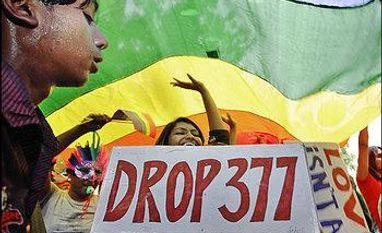 "SC refers petition on homosexuality to CJI's bench")


 Connect with us on WhatsApp