
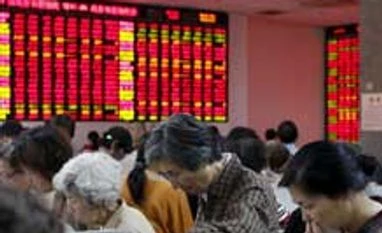
China shares continue to slide
The dramatic slide shattered three weeks of relative calm for Chinese equities, secured through heavy government intervention
 "China shares continue to slide")
WebinarsNew
Deep DiveNew
Explore Business Standard
The dramatic slide shattered three weeks of relative calm for Chinese equities, secured through heavy government intervention
Knock-On Effect
The wild volatility in China's markets has stoked fears among global investors about the broader health of the Chinese economy, hitting prices of growth-sensitive commodities such as copper, which hit a 6-year low on Monday.
The renewed slump helped drag shares elsewhere in Asia to three-week lows on Tuesday, and sent investors scurrying for safe-haven assets such as government bonds and the Japanese yen.
But, while recent stock market weakness will have caught out many Chinese retail investors and companies, the relatively low rate of stock ownership by households and a disconnect between valuations and economic fundamentals mean the impact on the economy is likely to be less than it would be in other markets.
The People's Bank of China said on Tuesday it would inject 50 billion yuan ($8.05 billion) into money markets in its biggest liquidity boost since July 7, near the trough of the last market sell-off.
The central bank also said, in a statement before the stock market opened, that it would use "various monetary tools" to maintain "appropriate levels of liquidity", a signal that the further monetary easing that many analysts have predicted could be in store.
China's main stock indexes had more than doubled over the year to mid-June, when a sudden swoon saw shares lose more than 30% of their value in a matter of weeks.
Markets finally began stabilising again in the second week of July after a barrage of official support measures.
China's central bank cut interest rates, brokerages formed stabilisation funds and regulators lifted restrictions on pensions and insurers investing in stocks, an implied combined total verbal commitment of almost $800 billion.
Beijing also cracked down on "malicious" short-sellers in the futures market, froze IPOs to prevent a liquidity drain and looked the other way as around 40% of companies suspended trading in their shares to escape the rout.
First Published: Jul 28 2015 | 10:49 PM IST


 Connect with us on WhatsApp