Unilever promised shareholders a multi-billion euro rewards package on Thursday after February's $143-billion takeover offer from Kraft Heinz jolted it into a corporate makeover aimed at proving it can go it alone.
The maker of Dove soap and Knorr soup said it would speed up cost savings, sell its shrinking margarines business and decide whether to scrap its dual Anglo-Dutch listing, which Unilever said would make it easier to do big acquisitions.
Shareholders, some of whom where unhappy that Unilever so swiftly spurned the approach by US rival Kraft, will also get a 5 billion euros ($5.3 billion) share buyback, the first since 2008, funded in part by a targeted rise in debt levels, and a 12 per cent dividend increase this year.
Unilever, one of Europe's biggest blue-chip stocks, called the Kraft episode a "trigger moment" to deeply review its business, as global packaged goods makers face slowing growth and more competition from start-ups exploiting evolving tastes for natural and healthy products.
"There is no doubt that however ... opportunistic it (the Kraft approach) was, it did raise expectations," Chief Executive Paul Polman said. "We are absolutely determined to use it as an opportunity to place Unilever on an even stronger footing." Unilever's London-listed shares, which have held onto the gains made by the Kraft bid as shareholders bet it would spur improved performance, closed up 1 percent at 39.78 pounds, while the FTSE 100 was down 0.3 per cent.
"They're not stretching here, and nor should they. They're in a very strong position and this is hopefully a sign they're going to be a bit leaner and more shareholder-focused," said GAM fund manager Ali Miremadi, who manages two worldwide equity funds that are 2.5 per cent invested in Unilever.
Unilever should be able to deliver the premium Kraft was offering or more over the next four or five years, he added.
Unilever set a 20 per cent underlying operating margin target for 2020, up from 16.4 per cent in 2016, fuelled by increased cost savings, which Goldman Sachs analysts said suggested 90 basis points of expansion per year, up from a prior goal of 40 to 80 points. But unlike the previous target, the new one excludes restructuring charges, which are seen totalling €3.5 billion over the period.
Unilever is now aiming for €6 billion of savings by 2019, up from €4 billion and said it would double savings within brand and marketing to €2 billion.
Goldman, which has a "sell" rating on the shares, worries that reduced marketing spend will hurt sales, but Chief Financial Officer Graeme Pitkethly said Unilever could cut the number of advertisements it makes by a third and the number of agencies it works with by half with little effect.
Much of the improvement would come from combining food, which includes Knorr and Hellmann's mayonnaise, with the ice cream and tea businesses, following the sale or spin-off of the spreads unit, where sales have fallen for years.
Unilever already has interest from private equity firms, who sources estimate may pay some 6 billion euros, but if a sale does not generate enough value it will pursue a spin-off and aims to complete the process by year-end.
More debt, more deals
In another strategic shift, Unilever said it will take on debt equal to 2 times core earnings, whereas its leverage ratio has been below one time for more than half of the past 20 years, Jefferies analysts have said.
"Unilever was vulnerable to a takeover exactly because it’s been so free of debt," said Neil Wilson, senior market analyst at ETX Capital in London.
Unilever said the leverage will help it grow.
"We think there will be a lot more action in the M&A pipeline ... and as ever we look forward to participating very actively," Pitkethly told Reuters.
While Polman signalled a potential interest in buying French's mustard and Frank's RedHot sauce, which are being sold by Reckitt Benckiser and which sources say could fetch a price around $3 billion, Unilever has generally been selling food brands and buying higher-growth home and personal care.
Analysts have long speculated whether Unilever may divest its food business, which makes up some 40 percent of revenue, and do a blockbuster personal care deal.
"Colgate (Palmolive) is the stand out option on this front," Exane BNP analyst Jeff Stent said, adding that Unilever's comments on Thursday may signal more openness.
Colgate has a market valuation of $65 billion and analysts expect a deal would need to be in the area of $90 billion.
Unilever executives said it still made sense to keep its food business, excluding spreads, although they left the door open for big-ticket deals, by touting how much easier they would be if it ditched the dual listings and headquarters in London and Rotterdam, as a single listing would make it easier to spin off businesses and use equity in a share deal.
"With the fast changes we see in the market we will see opportunities come and go quicker than they probably did in the past, and we need to be prepared," Polman said.
Unilever will decide by the end of the year whether to combine its dual listing and headquarters, adding that Brexit would not influence its choice.

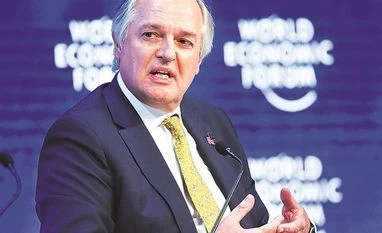 "Galvanised by Kraft, Unilever keeps shareholders sweet with cash")


 Connect with us on WhatsApp