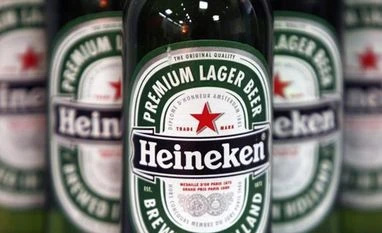
Heineken is likely to ask Vijay Mallya, who owes creditor banks more than $1 billion, to step down from the board of United Breweries, India's largest brewer, three people with direct knowledge of the plan told Reuters.
They said such a move would likely be a prelude to the Dutch drinks firm raising its stake in the maker of Kingfisher beer to above 50%, betting on a small but fast-growing beer market.
Heineken acquired a 37.5% stake in United Breweries in 2008 through its takeover of Scottish & Newcastle and has since increased its holding to 42.4%. With Mallya distracted by debts from a collapsed airline venture, this could be a timely grab by Heineken in a market that is growing much faster than the global average.
Two-thirds of Indians don't drink alcohol, often for religious or cultural reasons, but rapid urbanisation and a rising middle class are changing consumer habits. India accounts for 13% of world beer consumption, and annual volume growth is expected to outpace the global average, and major markets like China, through 2019, according to ratings agency Moody's.
The sources said Heineken was considering asking Mallya to step down from the United Breweries board he chairs. Alternatively, it could call a shareholder meeting to vote on his ouster from a company his father built into a family empire.
The sources asked not to be named due to the sensitivity of the matter.
A Heineken spokesman declined to comment on any move to tighten control over the Indian joint venture, but said India remains an "exciting opportunity" for growth given its demographics and strong economic fundamentals.
Mallya and a spokesman for UB Group did not respond to emailed requests for comment.
King of Good Times
Banks, regulators and investigators in India have turned up the heat on Mallya, who inherited United Breweries at the age of 28 and led it on an ambitious expansion.
Creaking under mountains of bad debt, banks themselves are under pressure from the government to chase up high profile cases like Mallya, whose Kingfisher Airlines collapsed in 2013 leaving unpaid wages and angry creditors.
Mallya has already been forced to give up control over United Spirits, part of his UB Group, to Diageo, which now owns about 55% of the company. He stepped down from the board last month, receiving a $75 million pay off. On Thursday, lenders to Kingfisher Airlines will auction off the company's Mumbai headquarters.
Mallya left India early this month - as banks sought a court order to confiscate his passport - and has not disclosed his whereabouts, but he has used his Twitter account to say he is not an "absconder" and would comply with Indian law.
The collapse of Kingfisher Airlines and the vast unpaid bank dues are a high-profile illustration of India's ineffective bankruptcy and debt recovery processes, and highlight the often close ties between politics and business.
A member of India's Upper House of Parliament, Mallya is known as the "King of Good Times" for his party lifestyle. He is often described as India's answer to British entrepreneur Richard Branson.
Mallya borrowed heavily to expand his airline's network, but a series of missteps, including the ill-conceived acquisition of a rival, saw the carrier grounded, some former senior staff said. They said Mallya micro-managed operations — from the selection of routes to the design of baggage tags — with no previous experience in the aviation industry.
"Unlike what he did in his liquor business, which is run by people who have the expertise, he got personally involved in the airline business .... a very, very wrong decision," said Sanjay Bahadur, who worked at the airline as a corporate affairs executive dealing with the government and regulators.
Mallya has blamed the airline's collapse on macro-economic factors and previous government policies.

 "Heineken eyes control of Vijay Mallya's United Breweries")

