
Japan output, retail sales rise, sign of gradual pickup from recession
Trade ministry data showed factory output rose 1.4% month-on-month in October
 "Japan output, retail sales rise, sign of gradual pickup from recession")
Explore Business Standard
Trade ministry data showed factory output rose 1.4% month-on-month in October
Japan's industrial output rose for a second straight month in October and retail sales grew much faster than expected - a tentative sign of the economy's recovery from a recession.
The latest indicator should ease concern among policymakers after data last week showed weakness in household spending and consumer inflation, which have kept pressure on the Bank of Japan to top up its already massive stimulus.
Trade ministry data on Monday showed factory output rose 1.4% month-on-month in October, versus economists' estimate for a 1.9% gain and 1.1% increase in September, led by general-purpose machinery, cars and electronics.
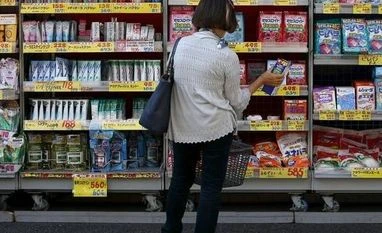
Separate data showed retail sales rose 1.8% in the year to October, more than a 0.8% annual gain expected, on sales of clothes, food and drink, cars and home appliances.
Monday's data underlines analysts' expectations that the economy is headed for a modest rebound over the current October-December quarter, after it suffered a second straight quarter of contraction through September - a technical recession.
"Factory output is expected to bottom out gradually, led by the electrical machinery sector reflecting a recovery in shipments centering on exports. General machinery is likely to stop falling," said Junichi Makino, chief economist at SMBC Nikko Securities.
"Fine weather and a rise in Chinese tourists helped spur retail sales, which have held firm since summer despite some weakness in items such as home appliances. I expect consumption will pick up in line with improving real household income."
Manufacturers surveyed by the ministry expect output to rise 0.2% in November and decrease 0.9% in December.
The ministry maintained its assessment on factory output to say it is seesawing. Officials noted that output levels remain low although a falling trend may be reversed.
Shipments grew for a second straight month in October to a level seen about a year ago, helping reduce inventory to its lowest in a year.
The batch of data comes at a time of growing economic strains, with Japan's relapse into recession in the last quarter and China's slowdown clouding the outlook.
While the Bank of Japan's 2% inflation target remains elusive, Prime Minister Shinzo Abe, under pressure to rev up growth that has stagnated for decades, ordered his cabinet on Friday to compile an extra fiscal spending plan this fiscal year.
First Published: Nov 30 2015 | 8:05 AM IST

