
Migrant crisis no excuse for Greece to ease up on reforms: EU's Moscovici
The costs to assist migrants come as Greece struggles to meet the terms of an 86 billion-euro bailout
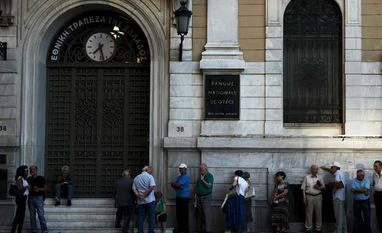 "Migrant crisis no excuse for Greece to ease up on reforms: EU's Moscovici")
WebinarsNew
Deep DiveNew
Explore Business Standard
The costs to assist migrants come as Greece struggles to meet the terms of an 86 billion-euro bailout
Greece's migrant crisis should not lead it to let up on reforms needed to comply with its multi-billion-euro bailout, European Economic Commissioner Pierre Moscovici said on Wednesday.
More than 590,000 migrants and refugees have passed through Greece since the start of the year. On a visit to Athens, Moscovici was asked if allowances should be made for countries bearing the brunt of the flood of people.
"The Commission has but one compass, that of the growth and stability pact, and rules should be implemented," he said, speaking through an interpreter.
"Concerning Greece, we have another compass, the adoption of the memorandum of understanding and the (reform) programme. Nothing should make us loosen these reforms."
The EU has offered to pay for accommodating 20,000 more migrants. Private groups have also pledged aid; the International Federation of Red Cross and Red Crescent Societies, for example, has promised to provide 12.7 million Swiss francs ($12.8 million) over the next seven months.
But Greece has already spent 1.5 billion euros on reception centres and staff to handle the migrants, a government source told Reuters. It needs 100 million euros for identification and relocation, the source said.
The costs come as Greece struggles to meet the terms of an 86 billion-euro bailout. Its international creditors have still not released all of a tranche totalling three billion euros out of an initial 26 billion-euro instalment of the bailout.
It is being held up by a divergence of views between Athens and creditors on coming up with an effective mechanism for Greece's troubled banks - which will be receiving bailout aid - to address non-performing loans affecting businesses, but also thousands of mortgage holders.
"We agree we must protect the most vulnerable. But we also have to find a solution about those who go bankrupt to avoid their obligations," Moscovici said, referring to strategic defaulters.
EXPECTS COMPROMISE
Greece wants to guard against foreclosure on primary residences by setting a higher threshold on property valuations than that proposed by lenders.
Such disagreements are standing in the way of Greece receiving a three-billion-euro sum outstanding from an initial tranche of aid. Moscovici, however, sounded upbeat that hurdles could be overcome.
"There are issues we have to deal with, so that next Monday we can take positive decisions, decisions which would lead to the payment of the sub-tranche of three billion available to Greece, at the Eurogroup meeting on Monday," Moscovici said, referring to a meeting of euro zone finance ministers.
In an interview with Greece's Skai TV, Moscovici said he was optimistic a compromise could be found and that Greece could return to growth in the second half of next year ahead of "strong growth" in 2017.
First Published: Nov 05 2015 | 1:49 AM IST


 Connect with us on WhatsApp