Telecom giant Vodafone recently unveiled its competitively priced mobile internet packs to increase the 3G user base in the Mumbai circle. But it won’t be long before other pockets of India catch up. “Today’s urban-centric mobile broadband data networks will extend their reach into rural and semi-urban regions,” says Vishant Vora, Director, Technology, Vodafone India. With over two decades of experience in the mobile telecom sector, Vora also predicts how, while the customer access would be more wireless in the future, the enterprise and aggregation networks will remain predominantly wireline. What is needed to build on the telecom services provided in the Indian market is a stable and forward-looking policy framework. Edited excerpts from an interview:
For Vodafone, how much of its network is about wired and wireless network? In the coming future, is there going to be more stress on wireless? We see wireline and wireless network technologies as complementing each other. While Vodafone in India has primarily been a wireless services operator, we have forayed into wireline networks significantly over the past five years, including international submarine bandwidth.
Our latest acquisition of Cable and Wireless demonstrates our strategic focus on providing high bandwidth solutions to customers. We are investing in both wireline and wireless networks. In the future, customer access would be more and more wireless, while the enterprise and aggregation networks would be predominantly wireline.
In your opinion, can the laid-wire network never be replaced? Due to increased bandwidth requirements in the access networks, it is becoming essential to grow our wireline network to support increased demand in the backhaul networks. We anticipate that over a third of our base stations will be connected on wireline networks over the next three years. Our growing Enterprise and SME customers require large bandwidth to support convergent applications. This places a demand on network, which can only be fulfilled by wireline networks primarily. Hence, we do not see the wireline networks ever being replaced.
With stiff competition in this era of mobile broadband, where do you see the telecom sector in India headed in the next two years in terms of network reach and market penetration? Currently a very high percentage of our usage and revenues are voice driven. We are already witnessing a sharp growth in mobile data usage and see a significant revenue shift to data over the next two to three years. There are factors such as social networking, collaboration and entertainment that are driving this shift.
Today’s urban-centric mobile broadband data networks would extend their reach into the rural and semi-urban regions. Our focus is now to deliver mobile broadband data to a wider geographical and population reach, thereby making the service available to a significantly large user base.
Machine to machine (M2M) and convergence of devices are being touted as current trends. In your opinion, how does that affect the telecom sector? What is Vodafone doing to capitalise on these trends? Vodafone is a world leader in the M2M space. The way M2M communication leverages the mobile network is quite different from human users. This has a huge impact on the way networks are dimensioned and architected. Vodafone is actively engaged in exploring complementary technologies to support M2M growth. Our M2M platform is rated as one of the best by reputed industry forums. We have already launched this platform in India and have a significant customer base.
Where does the Indian telecom sector stand vis-a-vis the other more developed countries? The Indian telecom sector stands out clearly in terms of delivering most modern, yet affordable services to a very large population spread across a wide geography. This is highly commendable in view of the fact that this revolution happened despite poor rural infrastructure, scarcity of spectrum and high government levies and taxes. In order for us to further build on the great work already done, it is essential that a stable and forward looking policy framework is in place.
What about the safety of networks in India as compared to what we see in other countries? Vodafone has been at the forefront of driving HSW -- health, safety and wellbeing of the society at large. We have taken numerous initiatives to bring down injuries and fatalities associated with the operations and deployments of large networks, and have also put in place an effective consequence management programme. We take pride that we have been able to reduce the fatality rate significantly over the past couple of years. We have been driving this cultural change not only within the organisation but also with all our partners and the extended ecosystem. We comply with all government regulations regarding safety and security of the network. While doing so, we leverage global best practices from Vodafone group.

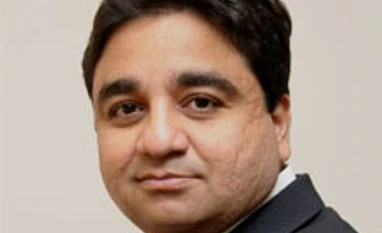 "Our focus is to deliver mobile broadband data to a wider audience")


 Connect with us on WhatsApp