Inside India's polls: flaws, fraud, and the battle to save democracy

Author SY Quraishi dwells on the Model Code of Conduct and other aspects of holding elections, including the role of exit polls, media and hate speech

India, election, ECI
Mr Quraishi also talks about the practicality of simultaneous elections.
Aditi Phadnis
5 min read Last Updated : Aug 14 2025 | 12:52 AM IST
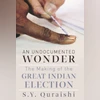
An Undocumented Wonder: The Making of the Great Indian Election
by S Y Quraishi
Published by Rupa Publications
499 pages, ₹695
 
The first edition of this book came out several years ago. The author, who served as India’s 17th Election Commissioner (2010-2012), has revisited some of the central problems, revised and updated the volume and has added to it, bringing it up to date to the 2024 Lok Sabha polls. The pages are replete with anecdotes, case studies and analyses. The book is divided into 16 chapters like Engaging Youth: Converting Subjects into Citizens, Secure Elections, Safer Democracy, Voter Education towards Peoples’ Participation and Money Power in Elections. The powers of the Election Commission and commissioners are also discussed, making it all the more relevant as it comes in the midst of several current controversies around Indian elections: Duplication of voters; the Special Intensive Revision; the role of the Supreme Court in the conduct of polls; and the powers of the Election Commission of India (ECI).
 
The SIR and the agitation against it by the Opposition parties — Chunaav Aayog (Election Commission) cannot be Churao Aayog (Theft Commission), per Congress MP in the Rajya Sabha, Jairam Ramesh — amid the cacophony that elections have been “stolen” has its origins in two issues. One, obviously the Election Commission is the only agency that has the power to order revision of electoral rolls. But what document will decide who an Indian citizen is? And, second, when reports pour in from all across India that people with the same names are registered as voters in more than one voting booth, does the de-duplication effort of the ECI even have any meaning? Mr Quraishi touches on these issues.
 
But the irony is palpable. He reports that a team of six polling personnel had to be dispatched to a village that had only one eligible voter because the right to vote of even one voter could not be denied. The book is rich with detail about how polling teams are sent to the remotest corners of the country from snow-capped mountain villages to desert areas. The teams often have to trek for several days to reach the polling booths and use all modes of transport like bullock-carts, camels or sometimes even elephants. And yet, the same system allows dead people to vote and enables the same person to vote, sometimes 15 times.
 
With the looming challenge of the ongoing census, revision of electoral rolls and eventually, delimitation of constituencies, these could become issues that have the potential of questioning the Election Commission’s authority and legitimacy. 
Mr Quraishi dwells on the Model Code of Conduct and other aspects of holding elections, including the role of exit polls, media and hate speech. He writes: “The 2024 election, unfortunately, may also go down in history as the election of hate speech. The number of instances of hate speech against minority communities in 2023 and in 2024 reflects the desire of the ruling dispensation to divide the electorate and push the party’s sectarian ideology”. 
 
There is a big section on “paid news” and the media. However, the rising tide of influencers on channels such as YouTube, deployment of artificial intelligence, augmented reality and virtual reality have the potential of turning communication channels like WhatsApp into a thing of the past and totally reinventing the paid news concept. These concerns do figure in the book but it will take another one to probe the full extent of the problem. Mr Quraishi quotes a study by the Tech Global Institute that found that 85 per cent of the political content posted by Indian influencers across various platforms failed to disclose its sponsorship, undermining transparency and accountability during elections.
 
There’s an interesting chapter on money power in elections that has a checklist of the modus operandi of illegal expenses during elections. The items range from envelopes of cash hidden inside newspapers and slipped beneath the electors’ door to cash transferred via RTGS to electors’ account, to cash given to rivals/ competitors to “throw” the election.
 
Mr Quraishi also talks about the practicality of simultaneous elections. While conceding that expenditure incurred on frequent polls, policy paralysis as the Model Code of Conduct kicks in, and the delivery of essential services impacted by the deployment of officials on election duty are concerns, he says it is not a feasible option — constitutional and legal reasons come in the way. The bottom line is: “How can we dissolve state assemblies when they are democratically chosen by the people”.
 
This book comes at a time when the ECI is in the vortex of unprecedented legal and political challenges. The value of the book lies in its ability to clearly and succinctly — and bravely — explain central issues, including the controversies surrounding the men who are appointed to the top posts in ECI. For anyone who wants to understand elections in India, warts and all, this is a go-to work, a labour of love.

One subscription. Two world-class reads.

Already subscribed? Log in

Subscribe to read the full story →
*Subscribe to Business Standard digital and get complimentary access to The New York Times

Smart Quarterly

₹900

3 Months

₹300/Month

SAVE 25%

Smart Essential

₹2,700

1 Year

₹225/Month

SAVE 46%
*Complimentary New York Times access for the 2nd year will be given after 12 months

Super Saver

₹3,900

2 Years

₹162/Month

Subscribe

Renews automatically, cancel anytime

Here’s what’s included in our digital subscription plans

Exclusive premium stories online

  • Over 30 premium stories daily, handpicked by our editors

Complimentary Access to The New York Times

  • News, Games, Cooking, Audio, Wirecutter & The Athletic

Business Standard Epaper

  • Digital replica of our daily newspaper — with options to read, save, and share

Curated Newsletters

  • Insights on markets, finance, politics, tech, and more delivered to your inbox

Market Analysis & Investment Insights

  • In-depth market analysis & insights with access to The Smart Investor

Archives

  • Repository of articles and publications dating back to 1997

Ad-free Reading

  • Uninterrupted reading experience with no advertisements

Seamless Access Across All Devices

  • Access Business Standard across devices — mobile, tablet, or PC, via web or app

Topics :BOOK REVIEWbooksS Y QuraishiElections in India

Next Story