The realities of terra incognita

Adam Goodheart's book on the Andamans and its inhabitants sheds light on the cost, merits, and the necessity of civilisation
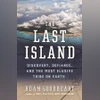
Book
Nandini Bhatia
5 min read Last Updated : Jan 31 2024 | 10:17 PM IST
The Last Island: A Story of the Andamans and the Most Elusive Tribe in the World
Author: Adam Goodheart 
Publisher: Juggernaut Books
Pages: 256
Price: Rs 699

When we think of an island, we picture an exotic getaway. For this reason, the Andaman chain of islands may have become more appealing to tourists recently, but it has always been an attraction for historians, anthropologists and explorers. Adam Goodheart’s second book The Last Island follows the breadcrumbs spread across history, leading him (and us) to the lost and last tribes of the Andaman. This little known intricate history, culture and geography is far from the fairy-tale-like charm expected of an isolated and primitive tribe in an Arcadian setting. Instead, Mr Goodheart fractures the romantic image and cuts through the “cultural fetish” with “island time”; turning it into a reality that is neither glorious nor endearing, but astounding nonetheless.

An archipelago situated in the Bay of Bengal is home to some of the world’s last tribes — Jarawa, Onge and Sentinelese — who have escaped the scrutiny of history, civilisation, and maybe to some extent, even evolution. Mr Goodheart’s research transports us to a world as unrecognisable to us as ours may seem to them. His journey begins two decades before the world’s eye turned to the islands and the Sentinelese went viral — in the transient way the internet works — after a 26-year-old American missionary, John Allen Chau, out to “bring enlightenment to Satan’s last stronghold” was shot dead by the tribals on his third visit in 2018. Although almost two decades ago, the 1981 Primrose shipwreck and the last-minute evacuation of the frantic crew had also briefly caught the world’s attention; another record of the unwelcoming tribe. Other than some exceptions here and there, the Andamanese tribes have “somehow managed to slip through the net of history”.

To be sure, the traveller-historian-journalist experiences terra incognita through a safe distance, both in time and space. He visits, observes and comes back to the safety of archives and interviews to interpret his experiences. Interaction with anthropologists such as T N Pandit are fruitful as are reviews of correspondence between the British administrators and the personal diaries of Maurice Vidal Portman, an 1879 officer in charge of the Andamanese who would serve as one of the most important people in the history of the islands. Mr Pandit and Portman, both government officers, dedicated their lives to the Andaman Islands. Mr Goodheart, as a true historian, places both in their respective contexts. Mr Pandit’s Kashmiri heritage and Portman’s sexuality explains the former’s empathic understanding of a loss of home and the latter’s (almost obsessive) affection towards the tribals, separating him from his predecessor’s scientific curiosity and turning it into something much more personal.

In moving back and forth in time, Mr Goodheart connects today’s Andaman — a member of independent India — with its colonial past. The fate of the Andamanese has followed a spiralling trajectory. Isolation that seems to go back 50,000 years has been pierced from time to time by many “Inen” — the strange spirits who come from the sea. Colonial masters with aspirations to “civilise”, “pet” or display the “savages”, captured and kidnapped natives, and built special “Andaman Homes”; where the misfortunes did not end. Some tribals became objects of amusement, others were put to use to make traditional items for sale, but most either fell sick with fatal “European diseases”, escaped or were returned to their homes. Either way, a tragedy awaited them. The museums today are filled with these colonial Andamanese exploits: Bows and arrows, accessories, skulls, and other artefacts. Other visitors — either astray like the Primrose crew, or foolhardy like Chau, or outlaws from the Cellular Jail, or poachers, or film/documentary crews, or inspecting helicopters post-tsunami — have all been welcomed by nothing but a “hail of arrows”.

Other than the accepting of gifts  — coconuts, utensils, metal — extended by official visitors, contact with these tribals has been sparse; barring some tribals who crossed their boundaries to get a glimpse of modernity, such as the teen Jarawa boy Enmei; or others seeking the “white man’s medicine”. Little is known of their culture, heritage, ways or political structure. At the same time, their nudity and obscurity are equally threatening to the modern world.

The Last Island  is an invigorating read. Mr Goodheart remains a humble observer in solving this Andamanese puzzle. His and the will of many before him – Mr Pandit, Portman and others in history who have wondered and wandered the seas near the Andamanese islands — bring to light some ubiquitous questions that predate the dawn of humanity and shall remain unanswered — the immeasurable cost, merits or even the need for civilisation. As the documentary,  Man in Search of Man (1974), asks, is there something that the intellectual man has forgotten that the primitive man has not? Is there something preferable about the proverbial Stone Age that outdoes the nuclear age?

The changing world indirectly impacts tribes that choose isolation over exposure: Rising sea temperatures, frequent floods, plastic and waste debris that float ashore, and escalating tribal extinction. As the internet and other mediums of connectivity reach the remotest corners of the world, one can only hope that the Andamanese tribes too will open themselves to the world — to be saved at least, if not studied.

The reviewer is a freelance feature writer @read.dream.repeat

One subscription. Two world-class reads.

Already subscribed? Log in

Subscribe to read the full story →
*Subscribe to Business Standard digital and get complimentary access to The New York Times

Smart Quarterly

₹900

3 Months

₹300/Month

SAVE 25%

Smart Essential

₹2,700

1 Year

₹225/Month

SAVE 46%
*Complimentary New York Times access for the 2nd year will be given after 12 months

Super Saver

₹3,900

2 Years

₹162/Month

Subscribe

Renews automatically, cancel anytime

Here’s what’s included in our digital subscription plans

Exclusive premium stories online

  • Over 30 premium stories daily, handpicked by our editors

Complimentary Access to The New York Times

  • News, Games, Cooking, Audio, Wirecutter & The Athletic

Business Standard Epaper

  • Digital replica of our daily newspaper — with options to read, save, and share

Curated Newsletters

  • Insights on markets, finance, politics, tech, and more delivered to your inbox

Market Analysis & Investment Insights

  • In-depth market analysis & insights with access to The Smart Investor

Archives

  • Repository of articles and publications dating back to 1997

Ad-free Reading

  • Uninterrupted reading experience with no advertisements

Seamless Access Across All Devices

  • Access Business Standard across devices — mobile, tablet, or PC, via web or app

Topics :BS ReadsBOOK REVIEWAndaman and Nicobar Islands

Next Story



