An honest budget that gives more to people than takes away: Atul Mehra
Budget has a lot of thrust on quality of education, improvement in infrastructure, tax reforms and modest divestment targets
Atul Mehra This Union Budget has taken honest steps which will in medium to long term enhance economic activities and spur growth in the economy.
Given that the government has had very limited time in power and also had to deal with macro-economic (high inflation coupled with low growth) and fiscal constraints, this is quite creditable.
Overall, the budget has a lot of thrust on quality of education, improvement in infrastructure, and tax reforms and modest divestment targets.
The Hon’ble Finance Minister has accepted the challenge of containing the fiscal deficit at 4.1% in FY115 and has further laid out the road map for fiscal consolidation with a targeted fiscal deficit of 3.6% in FY16 and 3.0% in FY17. The divestment target has been set at a fairly achievable Rs63000 crores.
Clarifications on and exemptions given to Real estate investment trusts (REITs) and infrastructure investment trusts (InvITs) will provide one more option to investors and in process further deepen the Indian capital markets.
He has also enabled Bank lending to the infrastructure sector to provide long term funds for the infrastructure sector at cost effective rates by minimizing regulatory pre-emption of CRR, SLR and PSL norms.
The sectoral measures announced by him were very inspiring and will go a long way in promoting growth. Four important ones being -
- The proposal to launch a new urea policy will have a positive impact on the fertilizer business
- The proposal to raise the foreign direct investment limit in insurance from 26% to 49%. This will help meet the capital requirements of the rapidly expanding insurance sector and also encourage new foreign entrants into the sector
- The proposal to raise the foreign direct investment limit in defence manufacturing to 49% will incentivise foreign firms to bring in investments and proprietary technology into the country
- To improve capitalisation of our public sector banks to be in line with the Basel III norms, the Hon’ble Finance Minister has proposed to increase the shareholding of the Indian people at large
He also announced a number of measures which intend to streamline the tax administration, reduce tax disputes, provide more certainty in tax policy for investors, and remove ambiguities. He also provided tax breaks for fresh investments and extended the 10-year tax holiday to attract investment in the power sector.
In my final analysis, I believe this was an honest budget which has given more to people than taken away. We are seeing some correction in the markets because of high expectations - low patience andweak global sentiments.
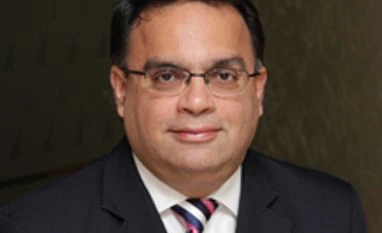
Atul Mehra is MD and Co-CEO, Investment Banking at JM Financial

 "An honest budget that gives more to people than takes away: Atul Mehra")

