
ONGC to import ethane to make up for changed Qatar LNG composition
This contract is coming to an end in 2028 and the revised contract signed last year envisages QatarEnergy supplying 'lean' gas (one that is stripped of ethane and propane)
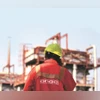 "ONGC to import ethane to make up for changed Qatar LNG composition")
Explore Business Standard

Associate Sponsors
Co-sponsor
This contract is coming to an end in 2028 and the revised contract signed last year envisages QatarEnergy supplying 'lean' gas (one that is stripped of ethane and propane)
Oil and Natural Gas Corporation (ONGC) plans to import ethane starting in mid-2028 to compensate for the altered composition of liquefied natural gas (LNG) sourced from Qatar, according to a tender floated by the state-owned firm.
India imports 7.5 million tonnes per annum of LNG from Qatar. Under the deal, QatarEnergy supplies 5 million tonnes a year of LNG that contains methane (used to produce electricity, make fertiliser, converted into CNG or used as cooking fuel) as well as ethane and propane -- feedstock to make LPG and petrochemicals -- on a firm basis and the rest on best endeavour basis.
This contract is coming to an end in 2028 and the revised contract signed last year envisages QatarEnergy supplying 'lean' gas (one that is stripped of ethane and propane).
ONGC spent about Rs 1,500 crore in setting up a C2 (ethane) and C3 (propane) extraction plant at Dahej in Gujarat. The C2/C3 so extracted was used as a feedstock in its petrochemical subsidiary, ONGC Petro additions Ltd (OPaL).
With the changed composition of LNG, the company is now looking at importing ethane.
"ONGC Petro additions Ltd (OPaL), a subsidiary of ONGC, is having a mega grassroot petrochemical complex and having the largest standalone dual feed cracker in Southeast Asia. Plant is having a dual feed cracker i.e. a mix of Naphtha and C2 (Ethane), C3 (Propane) & C4 (Butane) as feedstock," the tender document said.
"ONGC plans to source and supply 800,000 tonnes per annum of ethane to secure the feedstock for OPaL, from May 2028 onwards," it said.
And to ship this ethane, it is seeking joint venture partners to build very large ethane carriers (VLECs) that could ship the feedstock.
"ONGC through this expression of interest (EOI) is seeking partnership with party(ies) those possessing ownership and experience in the operation and management of VLEC and/or very large gas carrier (VLGC) and/or liquefied natural gas carrier (LNGC) in the global market," the tender said.
ONGC will be responsible for sourcing ethane. It will hire the VLECs from the joint venture for shipping of ethane.
The proposed joint venture will secure local and foreign funding and select shipyards for construction of VLECs.
The last date for submission of interest is March 27, the tender document said.
ONGC built the C2/C3 extraction unit at Dahej in Bharuch district of Gujarat in 2008-09. However, its subsidiary OPaL could build the petrochemical plant only in 2017. It sold the C2-C3 compounds extracted from the imported LNG from Qatar, to Reliance Industries owned IPCL till its plant to convert them into polymers came up.
C2-C3 plant has a handling capacity of 4.9 million tonnes per annum of LNG. OPaL plant comprises 1.1 million tonnes a year of ethylene capacity dual feed cracker, along with associated units and polymer plants, to manufacture HDPE, LLDPE, PP and Styrene Butadiene Rubber.
(Only the headline and picture of this report may have been reworked by the Business Standard staff; the rest of the content is auto-generated from a syndicated feed.)
First Published: Mar 23 2025 | 3:54 PM IST

