BS Infra Summit: Need a virtuous cycle of investments, says Gadkari

Financing and technology can overcome execution and road safety challenges to achieve national targets, says Nitin Gadkari
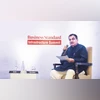
Nitin Gadkari, Union Minister of Road Transport and Highways, at the Business Standard Infrastructure Summit
Converting challenges into opportunities is a test of leadership, said Nitin Gadkari, Union Minister of Road Transport and Highways, at the Business Standard Infrastructure Summit
Nivedita Mookerji New Delhi
14 min read Last Updated : Aug 29 2025 | 6:04 AM IST
Infrastructure is core to India’s ambition to be a $5-trillion economy, creating jobs, attracting investments and fighting poverty, said Nitin Gadkari, Minister of Road Transport and Highways, at the Business Standard Infrastructure Summit 2025 in New Delhi. “Infrastructure needs a virtuous cycle of investments,” he told Nivedita Mookerji of Business Standard. Edited excerpts: 
I will begin by asking you for your assessment of the infrastructure sector in India. How do you consider it and how can it be made world class? 
Infrastructure is very important for the development of our country. Water, power, transport and communication: these are the main [components of] infrastructure. Without having good infrastructure, we cannot have capital investment, which in turn will result in poor employment opportunities, thus limiting our fight against poverty. 
It is the virtuous cycle of investments [in infrastructure] that will lead to greater productivity, job creation and demand, which in turn encourages further investment and the cycle continues. 
Everywhere we are constructing roads, hence industrial clusters, logistics parks and real estate are being developed. For example, the newly inaugurated Dwarka Expressway has resulted in a real estate development of around ₹8-10 trillion. It’s our government's vision to create the third largest economy, and that is the reason it has given the highest priority to infrastructure development. 
Anywhere we construct a road, there is huge potential for development of real estate, logistics parks etc.
 
A recent study conducted jointly by IIM Bangalore, IIT Kanpur and IIT Roorkee [Indian Institutes of Technology and Indian Institute of Management] showed that logistics cost in India has reduced by 6 per cent. I am confident that by the end of December, logistics costs would be reduced to single digit — it is around 16 per cent at present. By reducing this cost, we are going to increase our exports. To achieve the $5-trillion economy goal [set by the central government], it is important to have good infrastructure.
 
This will be in line with the logistics cost for other developed economies such as China (8 per cent), US (12 per cent), and Europe (12 per cent).
 
A few days ago, I released a report by a reputed company. It showed that the share of road transport in logistics is around 82 per cent; the share of railways is 1 per cent and the rest is by air and other means.
 
You must understand that by reducing logistics costs, we are going to increase exports and our Prime Minister’s vision is to make India a $5-trillion economy. For that reason, if we need to increase the growth of our country — be it the agricultural or industrial sector — we need good infrastructure and we are giving it the highest priority. I am 100 per cent sure we will shortly become the world’s third largest economy.
 
The Prime Minister, while inaugurating road projects recently, praised infrastructure creation. As minister, what challenges have you faced in infrastructure creation, especially in attracting private funds?
 
Challenges are everywhere. I always tell people that there are some people who convert opportunities into challenges and there are some people who convert challenges into opportunities. It’s a test of leadership and their vision. It’s like an examination for them.
 
There are challenges related to land acquisition, environment clearance, Railway clearance, etc. But we are constantly pursuing the matter and following up on that. I know the position of each and every project. Even when Parliament is in session, I am holding review meetings. I meet with 100-150 parliamentarians who tell me about the status of each and every project. I meet my officials as well and ask them about challenges. I instruct them to resolve problems that might be arising in any of the projects.
 
At present, we do not have much of a problem. The problem is not resources; it’s the expenditure of resources and not raising money itself. For example, in the Infrastructure Investment Trust (InVIT) model, we were able to raise the required money within hours in the IPO market, and it [the offer] was oversubscribed. We are giving 8.05 per cent interest return yearly on that. The cost of the bond was ₹100 — it now comes to ₹140, so the return is more than 22 per cent.
 
I request people from all income groups to invest in National Highways Authority of India bonds, as they yield good returns.
 
Every project of mine is economically viable — I don't have any problem. The only challenge lies in pushing the projects through the system. I can sanction projects worth ₹20 trillion annually as of today. But my system is only capable of executing projects worth only ₹3-4 trillion. So, money is not a problem for me. Toll collection today stands at ₹55,000 crore annually; it’s slated to go up to ₹140,000 crore in the next two years. I will monetise it for 15 years; tremendous money is available to me.
 
You spoke about the goal of Viksit Bharat. Do you think structural reforms are required for that as the government focusses on boosting growth, demand and consumption? Have you discussed infrastructure in your meetings with the Prime Minister?
 
Reform is a continuous process. We are thinking of using artificial intelligence (AI) in road construction; we have issued a circular making it mandatory to use pre-cast technology in road construction. We have decided to make green highways; we are also thinking of using construction equipment that runs on alternative fuels and not on fossil fuels. We have already used 80 tonnes of municipal garbage in road construction. We are also in the testing phase of using bio-bitumen obtained from rice straw to make roads. We are always innovating and finding newer ways to adapt to the arising conditions.
 
All of this is possible because of the feedback that we get from various stakeholders, especially people like you in the Press. We are always open to receive suggestions and feedback. We are using the best of the technology that is available anywhere in the world. For example, in the Zojila Tunnel in Kashmir, we saved around ₹5,000 crore because we made the best of the technology available to our people.
 
Reforms are a continuous process and everywhere we are making changes as and when they are arising.
 
While great bridges and tunnels are being built, there is a concern that highways and roads are not great. Road quality is an issue
 
There are challenges and problems. Landslides, particularly in Himachal Pradesh and Uttarakhand, are a big problem. We are trying to use AI and (other emerging technologies) in detecting landslide-prone stretches, accident-prone spots, waterlogging, and black spots along the national highways. We have already issued the circular. Wherever there is flooding, we are trying to use technology to check the strength of the bridges and (other structures).
 
I am the minister for national highways. I am not the minister for Delhi roads, municipal roads, panchayat roads, state roads, rural roads. My problem is that anywhere a new road is being built, people are giving me credit. Similarly, if anywhere there is a problem in roads, people are giving me the discredit. I am only responsible for national highways.
 
I ask you, where is the problem in national highways? If anyone can tell me.
 
As far as quality is concerned, I am very much conscious of it. I take strict action against erring contractors. I am blacklisting them, charging fines and even pursuing criminal charges as well. I am not going to tolerate anything regarding quality.
 
Though sometimes there are genuine problems as well. We are looking into that as well. If mistakes are bona fide we will forgive them, but if these are mala fide we are not going to spare them.
 
We had a summit session with people in private industry. They listed problems in the road sector and spoke about quality. You said that there will be penalties on contractors. But what more can we expect to really see safe roads?
 
It is the only sector where we have been trying our best for 11 years and still we are not successful in road safety. Every year there are 500,000 accidents and nearly 180,000 people lose their lives. Out of this, nearly two-third victims belong to 18-36 years of age.
 
You need to understand the reasons for this. First, is road engineering. We have already issued an order for improving black spots and have budgeted ₹40,000 crore. We have also started to identify landslide and waterlogging spots. For vehicles, we have 5-star ratings. Our automobile industry has global standards, and that is fine.
 
The other thing is enforcement. We passed the road safety bill a few years back; it increased fines. But human behaviour is hard to change. Nearly 30,000 accidents happen annually because of people not wearing helmets. We have taken a decision and issued an order that every two-wheeler seller has to give two helmets. But then people are still not wearing helmets. While driving, they are talking on mobile phones. People are not following lane discipline.
 
Indians…cross the road anywhere they want. Even women cross two-three feet barriers by climbing and crossing in the middle of roads.
 
We are spending money on awareness campaigns. We have on boarded celebrities to disseminate road safety messages and we are meeting with education ministers to include road safety lessons in school curriculum and we are trying to educate people so that behavioural change is driven home. It is really painful that we are not able to reduce the accidents and the fatalities.
 
We have introduced Rah-Veer scheme, also known as the Good Samaritan scheme, aimed at recognising and rewarding individuals who assist road accident victims by providing immediate medical attention and transportation to a hospital or trauma centre during the crucial ‘golden hour’. If any common man is taking a victim to a hospital, we reward him with ₹25,000. We want to save lives, that's it. Our focus is on that.
 
Policymakers and economists met with the Prime Minister last week to discuss the economy. Was infrastructure discussed in the meeting, especially the road sector? Are there any mega projects expected in the near future?
 
It was a meeting which had representatives from the Economic Advisory Council to the Prime Minister and NITI Aayog, along with some ministers. It was a really good meeting but it was private. It won’t be appropriate for me to tell you anything about it. But our government’s focus remains on boosting growth and exports.
 
I keep telling people that conversion of knowledge into wealth is the future. Using technology in different fields is very important and the Prime Minister’s dream is to make India a $5-trillion economy. In every sector, we have got policies to boost growth. We want to develop our economy and our growth rate and create more jobs.
 
I am confident that in due course of time, our growth will be very high.
 
When you compare the three stints of the Narendra Modi government, what has been the most satisfactory one?
 
I don't want to criticise the previous government, but for a long time rural, tribal areas were neglected. Our farmers are not only annadata (provider of food), they can be urjadata (provider of energy) as well. This decision to diversify farming into the energy sector could have been taken earlier. The way we have formed policies, our path is correct and the results have started coming in.
 
In due course of time, we will make our economy strong.
 
For example, the size of the automobile industry was around ₹1.2 trillion when I took office in 2014 and it stood at the seventh spot. Just six seven months ago, it surpassed Japan to reach third spot and its size has grown to ₹2.2 trillion. We are working on developing alternative fuels. Our target is to make the Indian automobile industry the number one industry in the world. We have a good scrapping policy.
 
The transformation that is happening is going to strengthen our economy and our future.
 
You spoke of hydrogen at a price of $1 per kg. Do you see that happening?
 
You need to understand that my target is to make hydrogen $1 per kg [for the National Green Hydrogen Mission]. This is my mission and ambition. This is not my declaration. Now, the problem is that once we make hydrogen from coal, it is black hydrogen. We are making hydrogen from water by using an electrolyser and from biomass — it is green hydrogen. From municipal waste, if we can sort it out, we can make methane which will be used to make CNG. From methane, we can get hydrogen, and we have already started 10 projects with the cooperation of HPCL, Reliance, Volvo etc.
 
We are starting trials for making hydrogen for buses. The problem is the transport of hydrogen and hydrogen-filling stations. I feel that it is the most important fuel for the future. I am confident that we will be an energy exporting country, instead of remaining an energy import country.
 
What would you say has been your biggest achievement as roads and highways minister?
 
It is up to you to decide that. But in my life freeing millions of rickshaw pullers and handcart pullers from the clutches of human exploitation by providing them with the option of mechanised rickshaws is my biggest achievement, apart from the numerous highways and expressways worth trillions of rupees that I may have commissioned as the road transport minister.
 
In my city and other parts of the country, there were rickshaw pullers. It was a form of human exploitation, and it was mostly the people from marginalised sections of society [who drove rickshaws]. When I became minister, I held meetings with all stakeholders and decided to make mechanised rickshaws available to them. As of today, nearly 15 million people across the country are using them (mechanised rickshaws), thus freeing themselves from this human exploitation. Even women are also able to earn a livelihood because of these mechanised rickshaws. This has to be my biggest achievement.
 
In the next three and half years left in your current term, what is it you would like to do? Are there any mega projects that we can expect?
 
I have got a list with me. This is hardly 2 per cent of what I have been doing. I am making hundreds of highways. My focus remains on serving people and I remain committed to fulfilling my duties as the minister.
 
My thrust is on doing the job that I have been given. Sometimes, I don't even have time to go to their inauguration. I remain committed to what I have been assigned and not think about what others are saying. It’s people like you who are the best judge of me and my work. Politics for me is an instrument of social change.
 
It is my vision of providing international standard public transportation, with lower pollution emissions. I am working on [providing] Dhaula Kuan [in Delhi] to Manesar [in Haryana] with taxi pods at present. They will save time and reduce pollution.
 
I have received proposals for ropeway cable cars, hyper loop, and sky bus. Also, we are working on alternatives and biofuels. Saving people from pollution, and especially air pollution, is the biggest challenge for me. My mission is also to make India free from fossil fuel imports and generate biofuels. Our import bill is in trillions, and the resulting pollution is a big concern. To save people from pollution will be the biggest challenge for me and my ministry. My mission is to make the country free from fossil fuel imports and make India atmanirbhar [self-reliant] and swawlambi [self-sufficient]. I am working on that.

One subscription. Two world-class reads.

Already subscribed? Log in

Subscribe to read the full story →
*Subscribe to Business Standard digital and get complimentary access to The New York Times

Smart Quarterly

₹900

3 Months

₹300/Month

SAVE 25%

Smart Essential

₹2,700

1 Year

₹225/Month

SAVE 46%
*Complimentary New York Times access for the 2nd year will be given after 12 months

Super Saver

₹3,900

2 Years

₹162/Month

Subscribe

Renews automatically, cancel anytime

Here’s what’s included in our digital subscription plans

Exclusive premium stories online

  • Over 30 premium stories daily, handpicked by our editors

Complimentary Access to The New York Times

  • News, Games, Cooking, Audio, Wirecutter & The Athletic

Business Standard Epaper

  • Digital replica of our daily newspaper — with options to read, save, and share

Curated Newsletters

  • Insights on markets, finance, politics, tech, and more delivered to your inbox

Market Analysis & Investment Insights

  • In-depth market analysis & insights with access to The Smart Investor

Archives

  • Repository of articles and publications dating back to 1997

Ad-free Reading

  • Uninterrupted reading experience with no advertisements

Seamless Access Across All Devices

  • Access Business Standard across devices — mobile, tablet, or PC, via web or app

Topics :Nitin Gadkariinfrastructurebs eventsNHAI

Next Story


