
Restoring trust with China will take time: Gen Dwivedi on LAC agreement
He further explained that the process will take place in phases, with each step aimed at reducing tensions
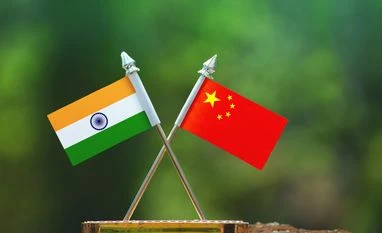 "Restoring trust with China will take time: Gen Dwivedi on LAC agreement")
WebinarsNew
Deep DiveNew
Explore Business Standard
He further explained that the process will take place in phases, with each step aimed at reducing tensions
Army Chief General Upendra Dwivedi on Tuesday emphasised the need to rebuild trust between India and China following the recent border patrolling agreement.
Speaking at an event titled "Decade of Transformation: Indian Army in Stride with the Future" at the United Service Institution, Gen. Dwivedi made his first statement after the announcement of the India-China border patrolling agreement.
Gen Dwivedi stressed that restoring trust along the Line of Actual Control (LAC) would be a gradual process, to return to the April 2020 status quo. "We are working to rebuild trust, and restoring that trust will take time," he added, highlighting the steps of disengagement, de-escalation, and buffer zone management as crucial for easing tensions between the two nations.
He further explained that the process will take place in phases, with each step aimed at reducing tensions. "This normal management of the LAC will not just stop there. There are phases in that as well," he added.
Referring to the buffer zones created along the LAC, Gen Dwivedi underscored that trust between the two countries will be rebuilt through mutual understanding. "We are trying to restore the trust. How will the trust be restored? It will get restored once we can see each other and convince each other. And we need to reassure each other that we are not creeping into buffer zones that are created," he said.
He also mentioned that ongoing patrolling activities provide a chance for both sides to reassure one another. "Patrolling gives you that kind of advantage, and as trust is rebuilt, other stages will also follow through," he noted.
The Ministry of External Affairs (MEA) announced on Monday that an agreement has been reached regarding patrolling arrangements along the Line of Actual Control (LAC) in the India-China border area.
The announcement came ahead of Prime Minister Narendra Modi's visit to Kazan, Russia, for the 16th BRICS summit scheduled from October 22 to October 24. Foreign Secretary Vikram Misri addressed the media, stating, "This agreement is the outcome of extensive discussions over the past several weeks with Chinese interlocutors at both diplomatic and military levels."
He noted that military commanders have been involved in negotiations aimed at addressing the tensions that have persisted since 2020. Misri explained that the agreement signifies a path toward disengagement and a potential resolution of the issues that arose during the significant confrontations in 2020.
Misri recalled the clashes between the People's Liberation Army of China and the Indian Army, particularly highlighting the violent encounters in June 2020, which resulted in casualties on both sides. He added that this agreement marks a critical step in stabilising relations between India and China as both nations seek to manage their border disputes and prevent further military confrontations.
Misri said," On several areas along the Line of Actual Control, we held discussions with Chinese interlocutors both at the diplomatic as well as military levels through meetings with military commanders at various levels. These discussions had in the past resulted in the resolution of standoffs at various locations. There are some locations and areas where stand-offs had not been resolved."
"Now, as a result of the discussions over the last several weeks, an agreement has been reached on patrolling arrangements along the Line of Actual Control (LAC) in the India-China border areas. This is leading to disengagement and eventually a resolution of the issues that arose in these areas in 2020," he added.
This agreement marks a crucial step in stabilising relations between India and China as both nations work to manage their border disputes and avoid further military confrontations.
In early May 2020, troops from China's People's Liberation Army and the Indian Army clashed at locations along the LAC, the disputed boundary between China and India. The situation escalated on June 15-16, 2020, resulting in casualties on both sides.
(Only the headline and picture of this report may have been reworked by the Business Standard staff; the rest of the content is auto-generated from a syndicated feed.)
First Published: Oct 22 2024 | 3:03 PM IST


 Connect with us on WhatsApp