
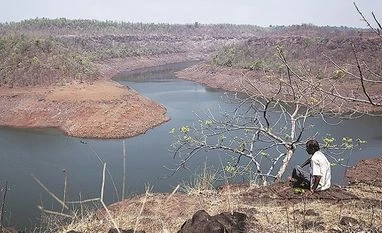
Over 19,000 water bodies in Odisha drying up of 'no use': Jal Shakti min
Out of 'in use' water bodies, a major proportion of water bodies are used in pisciculture followed by irrigation
 "Over 19,000 water bodies in Odisha drying up of 'no use': Jal Shakti min")
Explore Business Standard

Associate Sponsors
Co-sponsor
Out of 'in use' water bodies, a major proportion of water bodies are used in pisciculture followed by irrigation
Odisha, which is very rich with natural resources, has found places in top five positions in the first-ever census of water bodies conducted by the Jal Shakti Ministry. However, 19,630 water bodies in the state are not in use on account of drying up, siltation, salinity, destroyed beyond repair and other reasons.
As per the census, the top five states in terms of number of water bodies are West Bengal, Uttar Pradesh, Andhra Pradesh, Odisha and Assam which constitute around 63 per cent of the total water bodies in the country.
In terms of ponds, Odisha has remained at No 4 at all-India level while the state is at 3rd position when water tanks are counted. Odisha has remained at 5th position in census of lakes and 4th position in reservoirs, the report says.
The census also found that 89.2 per cent (1,62,207) water bodies are in use whereas the rest 10.8 per cent (19,630) are not in use on account of drying up, siltation, salinity, destruction beyond repair and other reasons. Out of 'in use' water bodies, a major proportion of water bodies are used in pisciculture followed by irrigation.
It was also found that only 3 per cent (5,445) of the water bodies in Odisha are covered in the district irrigation plan/state irrigation plan. Among these, 44.9 per cent (2,444) are tanks, 39.1 per cent (2,129) are ponds and the remaining 16.0 per cent (872) are lakes, reservoirs, water conservation schemes/percolation tanks/check dams etc.
In the first census of water bodies, 1,81,837 water bodies have been enumerated in the state of Odisha, out of which 97.9 per cent (1,78,054) are in rural areas and the remaining 2.1 per cent (3,783) are in urban areas.
Similarly, 50.9 per cent (92,575) of water bodies are privately owned whereas the remaining 49.1 per cent (89,262) are under public ownership.
By location, 31.3 per cent (56,900) water bodies are located in tribal areas and the remaining 68.7 per cent (1,24,937) are located in areas under drought prone areas, flood prone areas, Naxal-affected areas and other areas.
There are a total of 7,109 natural and 1,74,728 man-made water bodies in the state. Out of 7,109 natural water bodies, 97.3 per cent (6,915) are located in rural areas whereas the remaining 2.7 per cent (194) are located in urban areas.
Out of 1,74,728 man-made water bodies, 97.9 per cent (1,71,139) water bodies are located in rural areas and the remaining 2.1 per cent (3,589) are located in urban areas.
Commenting on the census report, Ranjan Panda, a water activist and popularly known as waterman of Odisha, said the state has such a large number of water bodies because, jamidars and community leaders have dug many ponds in rural areas across the state. Besides, several water bodies have been created under government schemes and programmes.
However, the government needs to come up with a specific policy or programme for conservation and redevelopment of water bodies, he said.
Apart from the above, there is a need to conduct another survey of the water bodies, which were destroyed or dried up. Accordingly, an action plan should be prepared for revival of such water bodies, suggested Panda.
--IANS
bbm/uk/
(Only the headline and picture of this report may have been reworked by the Business Standard staff; the rest of the content is auto-generated from a syndicated feed.)
First Published: Apr 30 2023 | 9:57 AM IST

