India can achieve an overall 25 per cent blending rate by 2030 if the automobile sector moves to making flexi fuel vehicles, Ballani says. He adds that the government is looking at charging lower taxes on flexi fuel vehicles, on the lines of the low rate on electric vehicles.
But boosting the blending rate will require an additional 8,000 million litres of ethanol by 2030-31, on top of the existing production capacity of 16,830 million litres, at a cost of Rs 35,000 crore, Ballani says. For such spending to happen, the industry would need New Delhi to continue an existing interest subvention scheme on loans, and an offtake or price mechanism.


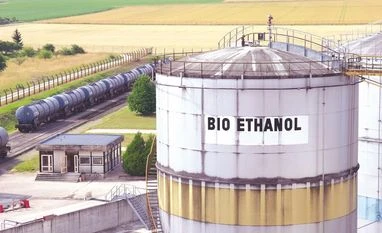 "Ethanol 2.0 policies key for India to match Brazil as a biofuel superpower")









