Associate Sponsors

Co-sponsor

Post-Covid boom in profits yet to show in India Inc capital expenditure

Corporate profits have grown at a CAGR of 32.4% since FY20 but firms' net fixed assets have grown at 8.6% CAGR in FY20-24
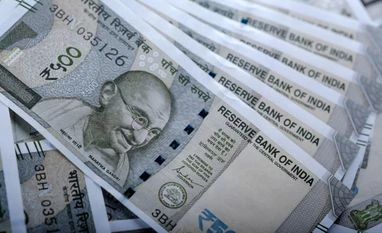
Rs, Rupee, Indian Currency, 500 Rs
(Photo: Shutterstock)
Krishna Kant Mumbai
4 min read Last Updated : Sep 09 2024 | 11:42 PM IST
The last four years, the best for corporate profits in a long time, have not been as impressive for corporate capital expenditure.

The combined net profits of India’s top listed companies excluding banks, financial services, and insurance (BFSI) increased at a compound annual growth rate (CAGR) of 32.4 per cent since FY20, a sharp jump from the 7.4 per cent in corporate earnings between FY14 and FY19.

However, this didn’t translate into corresponding growth in corporate investment in fixed assets such as plant and machinery.

The combined net fixed assets including capital work in progress of the non-BFSI companies in the Business Standard sample grew at a CAGR of 8.6 per cent during FY20-24, slightly more than the 8.5 per cent in fixed assets during FY14-19. (See the adjoining charts.)

The annual net profits of 898 non-BFSI companies in the Business Standard sample are up more than three times in the last four years from nearly Rs 3 trillion in FY20 to Rs 9.17 trillion in FY24. In the same period, the combined net fixed assets of these companies increased 39.3 per cent from around Rs 51 trillion at the end of FY20 to around Rs 71 trillion at the end of FY24.

Analysts attribute the divergence between earnings growth and capex to a slowdown in revenue growth.


“The boom in earnings in recent years has done little to improve overall demand in the economy, resulting in poor revenue growth. Besides, year-on-year growth in revenues and profits has been volatile in recent years, making it tough for companies to project future growth and earnings. This is discouraging them from making large investments in new projects,” said Dhananjay Sinha, co-head, research and equity strategy, Systematix Institutional Equity.

The companies’ combined net sales were up just 2.9 per cent in FY24, down sharply from the 24.4 per cent in FY23, and their asset utilisation ratio, as measured by comparing net sales and assets, declined last financial year.

The companies in the sample have been drawn from those comprising the BSE 500, BSE Mid-Cap and BSE Small Cap indices. They had a combined market capitalisation of Rs 430 trillion on September 6, accounting for 93.5 per cent of the combined market capitalisation of all 4,192 actively traded companies on the BSE. All BSE traded companies had a combined market capitalisation of Rs 460 trillion on Friday.

The numbers suggest the companies use the post-Covid boom in earnings to strengthen and de-leverage their balance sheet, reward their shareholders with higher dividend and share buyback, and build cash reserves.

The companies’ combined gross borrowing grew at a CAGR of only 4.8 per cent during FY20-24, down sharply from the 7.5 per cent during FY14-19.

Adjusted for cash and equivalents on their books, net debt grew at a CAGR of only 1.9 per cent during FY20-24, down sharply from the 9.4 per cent during FY14-19.

In comparison, these companies’ combined net worth grew at a CAGR of 12.5 per cent during FY20-24, up from the 9.5 per cent CAGR in net worth during FY14-19.

As a result, these companies’ gross debt to equity ratio declined to 0.67 at the end of FY24, the lowest in at least 14 years. 

Similarly, the net debt to equity ratio declined to 0.4 at the end of FY24, just a notch above the 14-year low of 0.39 at the end of FY22. The ratio had peaked at 0.59 in FY20.

Faster growth in net worth was largely due to a sharp rise in retained earnings -- the proportion of net profits that companies save as reserves and surplus. The profit and loss account balance in the company’s reserves grew at a CAGR of 20.2 per cent in the last four years and more than doubled in value since FY20. These accumulated profits accounted for 46.9 per cent of all reserves in FY24, up sharply from the 36.4 per cent in FY24 and the highest in at least 14 years.

One subscription. Two world-class reads.

Already subscribed? Log in

Subscribe to read the full story →
*Subscribe to Business Standard digital and get complimentary access to The New York Times

Smart Quarterly

₹900

3 Months

₹300/Month

SAVE 25%

Smart Essential

₹2,700

1 Year

₹225/Month

SAVE 46%
*Complimentary New York Times access for the 2nd year will be given after 12 months

Super Saver

₹3,900

2 Years

₹162/Month

Subscribe

Renews automatically, cancel anytime

Here’s what’s included in our digital subscription plans

Exclusive premium stories online

  • Over 30 premium stories daily, handpicked by our editors

Complimentary Access to The New York Times

  • News, Games, Cooking, Audio, Wirecutter & The Athletic

Business Standard Epaper

  • Digital replica of our daily newspaper — with options to read, save, and share

Curated Newsletters

  • Insights on markets, finance, politics, tech, and more delivered to your inbox

Market Analysis & Investment Insights

  • In-depth market analysis & insights with access to The Smart Investor

Archives

  • Repository of articles and publications dating back to 1997

Ad-free Reading

  • Uninterrupted reading experience with no advertisements

Seamless Access Across All Devices

  • Access Business Standard across devices — mobile, tablet, or PC, via web or app

Topics :BFSIcorporate earningsIndia Inc earnings

Next Story


