Maldives' strategic shift: Domestic priorities induce a thaw with India

As debt looms and foreign reserves dwindle, Muizzu's invitation to PM Narendra Modi and the push for increased Indian tourism highlight a pragmatic approach to foreign relations

Mohamed Muizzu, Mohamed, Modi, Narendra Modi
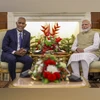
Prime Minister Narendra Modi with President of Maldives Mohamed Muizzu during a meeting at Hyderabad House, in New Delhi, Monday, Oct. 7, 2024. (Photo: PTI)
Business Standard Editorial Comment
3 min read Last Updated : Oct 09 2024 | 3:00 PM IST
It took an economic crisis for Maldives President Mohamed Muizzu to transition from an “Indian Out” champion during his 2023 election campaign to an expansive host a year later, inviting Prime Minister Narendra Modi for a state visit next year and exhorting more Indian tourists to visit the island nation. Staring at a debt default and with foreign-exchange reserves falling to $440 million, roughly worth one and a half months’ imports, Male’s newfound bonhomie with New Delhi has been built on a financial package that includes a $400 million currency-swap deal and an additional Rs 3,000 crore ($357 million) swap deal to enable companies to do business in local currencies rather than dollars. India is the Maldives’ largest creditor after China, with which the Maldives had forged closer relations since 2014 by joining the latter’s Belt and Road Initiative (BRI). Talks are now on for an Indo-Maldivian free trade agreement. This progress could be viewed as a reflection of India’s even-handed management of the relationship despite the shrill anti-Indian rhetoric from Male.


But integral to the new understanding is Male’s recognition that closer alignment with an emerging superpower need not come at the cost of good relations with a friendly giant nearby that supplies the commodities and materials for the daily consumption of Maldivians and has contributed significantly to the island nation’s primary industry, tourism. For instance, ahead of a May 10 deadline from Mr Muizzu for Indian military personnel to quit the country, India permitted the export of certain essential commodities for FY25 under a bilateral mechanism that raised the quota for eggs, potatoes, onions, sugar, rice, wheat flour, and pulses, the highest since the India-Maldives trade agreement came into effect in 1981. These commodities, plus spices, fruit, vegetables, poultry, pharmaceuticals, cement, river sand and stone aggregates, have made India the Maldives’ second-largest trade partner, with bilateral trade crossing $500 million in 2022. Such consideration may appear remarkable, given the level of provocation since 2012, when the Maldives annulled the contract with Indian infrastructure group GMR to operate the international airport. In January, gratuitous insults on X by a Maldivian minister following Mr Modi’s visit to the Lakshadweep archipelago caused Indian tourist visits to drop 33 per cent (though the government officially distanced itself from these remarks). Mr Muizzu also chose China for his inaugural state visit, signing 20 new agreements including financial and military assistance.

It would be inaccurate to read into the conspicuous bonhomie of this five-day visit a comprehensive reorientation of relations from Beijing to New Delhi. The Maldives remains a critical geo-strategic location for Beijing in the Indian Ocean, through which 80 per cent of China’s oil imports flow. As such, it is in China’s interests to maintain a friendly military presence in the region, and the Maldives remains dependent on BRI investment. At the same time, the Maldives has been an integral part of Mr Modi’s “Neighbourhood First” strategy. New Delhi loaned Male $500 million for infrastructure projects in 2021 and announced a $100 million line of credit in 2022. After the military presence was replaced by a civilian presence in the Maldives, India announced plans to open a naval base on neighbouring Minicoy Island. The optics of this visit, therefore, should best be seen as a pragmatic realisation of domestic priorities in the Maldives.


One subscription. Two world-class reads.

Already subscribed? Log in

Subscribe to read the full story →
*Subscribe to Business Standard digital and get complimentary access to The New York Times

Smart Quarterly

₹900

3 Months

₹300/Month

SAVE 25%

Smart Essential

₹2,700

1 Year

₹225/Month

SAVE 46%
*Complimentary New York Times access for the 2nd year will be given after 12 months

Super Saver

₹3,900

2 Years

₹162/Month

Subscribe

Renews automatically, cancel anytime

Here’s what’s included in our digital subscription plans

Exclusive premium stories online

  • Over 30 premium stories daily, handpicked by our editors

Complimentary Access to The New York Times

  • News, Games, Cooking, Audio, Wirecutter & The Athletic

Business Standard Epaper

  • Digital replica of our daily newspaper — with options to read, save, and share

Curated Newsletters

  • Insights on markets, finance, politics, tech, and more delivered to your inbox

Market Analysis & Investment Insights

  • In-depth market analysis & insights with access to The Smart Investor

Archives

  • Repository of articles and publications dating back to 1997

Ad-free Reading

  • Uninterrupted reading experience with no advertisements

Seamless Access Across All Devices

  • Access Business Standard across devices — mobile, tablet, or PC, via web or app

Topics :Business Standard Editorial CommentMaldivesBelt and Road InitiativeEconomic Crisis

Next Story




