Home / World News / China accuses Canada of protectionism over 100% tariffs on Chinese-made EVs
China accuses Canada of protectionism over 100% tariffs on Chinese-made EVs
The Chinese Commerce Ministry said in a statement the tariffs would disrupt the stability of global industrial and supply chains, severely impact China-Canada economic and trade ties
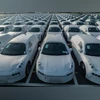
A Chinese Foreign Ministry spokesperson on Tuesday urged Canada to not politicize economic and trade issues. | Photo: Bloomberg
China on Tuesday accused Canada of protectionism after Prime Minister Justin Trudeau's government imposed a 100 per cent tariff on imports of Chinese-made electric vehicles, matching US duties on Chinese-made EVs.
The Chinese Commerce Ministry said in a statement the tariffs would disrupt the stability of global industrial and supply chains, severely impact China-Canada economic and trade ties and damage the interests of enterprises in both countries.
China is strongly dissatisfied and firmly opposes this, the statement read.
Canada claims it supports free trade and the multilateral trading system based on (World Trade Organization) rules, but it blatantly violated WTO rules and announced it will take unilateral tariff measures by blindly following individual countries. It is typical trade protectionism, it added.
The ministry urged Canada to immediately correct its wrong practices and said that Beijing would take any necessary measures to defend the rights and interests of Chinese companies.
Canada's announcement came after encouragement by US national security adviser Jake Sullivan during a meeting with Trudeau and Cabinet ministers on Sunday. Sullivan began his first visit to Beijing on Tuesday.
Chinese officials are likely to raise concerns about the American tariffs with Sullivan as Beijing continues to repair its economy, which was hit by the Covid-19 pandemic. In May, US President Joe Biden slapped major new tariffs on Chinese electric vehicles, advanced batteries, solar cells, steel, aluminum and medical equipment.
A Chinese Foreign Ministry spokesperson on Tuesday urged Canada to not politicize economic and trade issues.
China's burgeoning electric vehicle industry is the result of continuous technological innovation, a well-established industrial and supply chain and full market competition, spokesperson Lin Jian said.
Trudeau said that Canada also would impose a 25 per cent tariff on Chinese steel and aluminum.
Actors like China have chosen to give themselves an unfair advantage in the global marketplace, he said.
One of the Chinese-made EVs imported into Canada is from Tesla, made at the company's Shanghai factory, though the US company could avoid the tariff by switching to supplying Canada from factories in the US or Germany.
Chinese brands aren't yet a player in Canada. However, Chinese EV company BYD established a Canadian corporate entity last spring and has indicated that it intends to try and enter the Canadian market as early as next year.
Chinese firms can sell EVs for as little as $12,000. China's solar cell plants and steel and aluminum mills have enough capacity to meet much of the world's demand. Chinese officials argue their production keeps prices low and would aid a transition to a green economy.
Deputy Prime Minister Chrystia Freeland said that Canada also will launch a 30-day consultation about possible tariffs on Chinese batteries, battery parts, semiconductors, critical minerals, metals and solar panels.
China has an intentional state-directed policy of overcapacity and oversupply designed to cripple our own industry, Freeland said. We simply will not allow that to happen to our EV sector, which has shown such promise.
(Only the headline and picture of this report may have been reworked by the Business Standard staff; the rest of the content is auto-generated from a syndicated feed.)

 "China accuses Canada of protectionism over 100% tariffs on Chinese-made EVs")

