Migrants rushed across the Mexico border Thursday, racing to enter the US before pandemic-related asylum restrictions are lifted in a shift that threatens to put a historic strain on the nation's beleaguered immigration system.
The imminent end of the rules known as Title 42 stirred fear among migrants that the changes would make it more difficult for them to stay in the US. And the Biden administration was dealt a potentially serious legal setback when a federal judge temporarily blocked its attempt to more quickly release migrants when Border Patrol holding stations are full.
With a late-night deadline looming, misinformation and confusion buffeted migrants as they paced the border at the Rio Grande, often unsure of where to go or what to do next.
At Matamoros, across from Brownsville, Texas, throngs of migrants some clutching small children waded across spring river currents, pushed through thickets to confront a border fortified with razor wire. Other migrants settled into shelters in northern Mexico, determined to secure an asylum appointment that can take months to schedule online.
Many migrants were acutely aware of looming policy changes designed to stop illegal crossings and encourage asylum seekers to apply online and consider alternative destinations, including Canada or Spain.
I don't know what's going to happen tomorrow, said Jhoan Daniel Barrios, a former military police officer from Venezuela as he paced with two friends along the the border in Ciudad Jurez, across from El Paso, Texas, looking for a chance to seek refuge in the U.S.
We don't have any money left, we don't have food, we don't have a place to stay, the cartel is pursuing us, said Barrios, whose wife was in U.S. custody. What are we going to do, wait until they kill us?
Last week, Barrios and his friends entered the U.S. and were expelled. They had little hope of a different result Thursday.
On the U.S. side of the river, many surrendered immediately to authorities and hoped to be released while pursuing their cases in backlogged immigration courts, which takes years.
It was not clear how many migrants were on the move or how long the surge might last. By Thursday evening, the flow seemed to be slowing in some locations, but it was not clear why, or whether crossings would increase again after the coronavirus-related restrictions expire.
A U.S. official reported the Border Patrol stopped some 10,000 migrants on Tuesday nearly twice the level from March and only slightly below the 11,000 figure that authorities have said is the upper limit of what they expect after Title 42 ends.
More than 27,000 people were in U.S. Customs and Border Protection custody, the official said.
Our buses are full. Our planes are full, said Pedro Cardenas, a city commissioner in Brownsville, Texas, just north of Matamoros, as recent arrivals headed to locations across the U.S.
President Joe Biden's administration has been unveiling strict new measures to replace Title 42, which since March 2020 has allowed border officials to quickly return asylum seekers back over the border on grounds of preventing the spread of COVID-19.
The new policies crack down on illegal crossings while also setting up legal pathways for migrants who apply online, seek a sponsor and undergo background checks. If successful, the reforms could fundamentally alter how migrants arrive at the U.S.-Mexico border.
But it will take time to see results. Biden has conceded the border will be chaotic for a while. Immigrant advocacy groups have threatened legal action. And migrants fleeing poverty, gangs and persecution in their homelands are still desperate to reach U.S. soil at any cost.
Many migrants were acutely aware of looming policy changes as they searched Thursday for an opportunity to turn themselves over to U.S. immigration authorities before the 11:59 EDT deadline.
While Title 42 prevented many from seeking asylum, it carried no legal consequences, encouraging repeat attempts. After Thursday, migrants face being barred from entering the U.S. for five years and possible criminal prosecution.
Holding facilities along the border already were far beyond capacity. But late Thursday, U.S. District Judge T. Kent Wetherell, an appointee of President Donald Trump, halted the administration's plan to begin releasing migrants with notices to report to an immigration office in 60 days when holding centers reach 125% capacity, or where people are held an average of 60 hours. The quick releases were to also be triggered when authorities stop 7,000 migrants along the border in a day.
The state of Florida argued the administration's plan was nearly identical to another Biden policy previously voided in federal court. Earlier Thursday, the Justice Department said its new move was a response to an emergency and being prevented from carrying it out could overwhelm the border and raise serious health and safety risks to noncitizens and immigration officials.
Weatherell blocked the releases for two weeks and scheduled a May 19 hearing on whether to extend his order.
Homeland Security Secretary Alejandro Mayorkas had already warned of more crowded Border Patrol facilities to come.
I cannot overstate the strain on our personnel and our facilities," he told reporters Thursday.
Even as migrants were racing to reach U.S. soil before the rules expire, Mexican President Andrs Manuel Lpez Obrador said smugglers were sending a different message. He noted an uptick in smugglers at his country's southern border offering to take migrants to the United States and telling them the border was open starting Thursday.
On Wednesday, Homeland Security announced a rule to make it extremely difficult for anyone who travels through another country, like Mexico, or who did not apply online, to qualify for asylum. It also introduced curfews with GPS tracking for families released in the U.S. before initial asylum screenings.
The administration says it is beefing up the removal of migrants found unqualified to stay in the U.S. on flights like those that brought nearly 400 migrants home to Guatemala from the U.S. on Thursday.
Among them was Sheidi Mazariegos, 26, who arrived with her 4-year-old son just eight days after being detained near Brownsville.
I heard on the news that there was an opportunity to enter, I heard it on the radio, but it was all a lie, she said. Smugglers got her to Matamoros and put the two on a raft. They were quickly apprehended by Border Patrol agents.
Mazariegos said she made the trek because she is poor and hoped to reunite with her sisters living in the U.S.
At the same time, the administration has introduced expansive new legal pathways into the U.S.
Up to 30,000 people a month from Haiti, Cuba, Nicaragua and Venezuela can enter if they apply online with a financial sponsor and enter through an airport. Processing centers are opening in Guatemala, Colombia and elsewhere. Up to 1,000 can enter daily though land crossings with Mexico if they snag an appointment on an online app.
At shelters in northern Mexico, many migrants chose not to rush to the border and waited for existing asylum appointments or hopes of reserving one online.
At the gape Misin Mundial shelter in Tijuana, hundreds of migrants bided their time. Daisy Bucia, 37, and her 15-year-old daughter arrived at the shelter over three months ago from Mexico's Michoacn state fleeing death threats and have an asylum appointment Saturday in California.
Bucia read on social media that pandemic-era restrictions were ending at the U.S.-Mexico border, but preferred to cross with certainty later.
What people want more than anything is to confuse you, Bucia said.

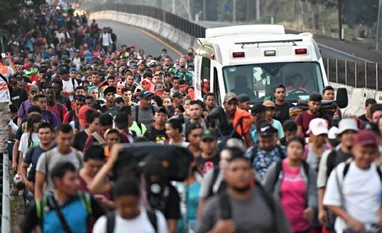 "Migrants rush across US border in final hours before Title 42 expires")


 Connect with us on WhatsApp