
Prez Xi urges hi-tech smart system usage to boost China's border defence
Xi highlighted the need to strengthen technological empowerment in border defence, enhance the development of new methods
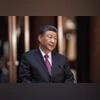 "Prez Xi urges hi-tech smart system usage to boost China's border defence")
WebinarsNew
Deep DiveNew
Explore Business Standard
Xi highlighted the need to strengthen technological empowerment in border defence, enhance the development of new methods
Chinese President Xi Jinping has called for greater use of technology and the deployment of a smart system for border defence to meet new opportunities and challenges, amidst Beijing's unresolved land and maritime territorial disputes with its neighbours.
The instructions were made during a group study session on Tuesday attended by the Communist Party's 24-member Politburo, its top policymaking body.
Xi highlighted the need to strengthen technological empowerment in border defence, enhance the development of new methods and conditions for border, maritime, and air defence, and build a comprehensive and smart management and control system," Hong Kong-based South China Morning Post reported on Thursday.
This aligns with Xi's repeated calls to improve the use of advanced technology in the armed forces to meet modernisation goals by 2027 and achieve the goal of building a world-class military by 2050.
Tuesday's meeting lacked details about what the smart systems would entail, the Post report said.
However, an article published last year in the PLA Daily, the official newspaper of the People's Liberation Army, said technological advancements for border defence included modernised reconnaissance, surveillance, and early warning networks for efficient monitoring, as well as unmanned weapons incorporating AI.
Xi called for efforts to build a strong, stable, and modern border defence, as well as air and sea defence, to safeguard the country's national security and interests.
As the world undergoes a century of accelerating changes, the influencing factors have become increasingly complex. The construction of border, maritime, and air defence faces new opportunities and challenges, Xi said.
China is facing tensions on multiple fronts, including the military standoff with India in eastern Ladakh since May 2020 after Chinese troops aggressively moved closer to the LAC.
Since then the two sides have so far held 21 rounds of Corps Commander-level talks to resolve the standoff. The two sides so far agreed to disengage from four points, namely the Galwan Valley, the Pangong Lake, Hot Springs, and Jianan Daban (Gogra) in eastern Ladakh.
India is pressing the People's Liberation Army (PLA) to disengage from the Depsang and Demchok areas, maintaining that there cannot be the restoration of normalcy in its relations with China as long as the state of the borders remains abnormal.
On Wednesday, India and China held a Working Mechanism for Consultation and Coordination on India-China Border Affairs (WMCC) in New Delhi.
The Ministry of External Affairs (MEA) said the two sides reviewed the current situation along the LAC with a view to finding an early resolution of the outstanding issues.
In the South China Sea, China has ongoing territorial disputes with the Philippines, and in the East China Sea, it is at odds with Japan over the contested Diaoyu Islands, known in Japan as the Senkaku Islands.
Xi called for strengthened overall coordination to secure the borders, according to state news agency Xinhua.
Xi said on Tuesday that managing China's border defence involved multiple military and civilian departments. He called for combined efforts by the military, police, civilians and local governments.
He praised the achievements of recent reforms in border defence management systems, force structure and national defence policies, adding that a series of significant actions have been carried out to effectively safeguard our territorial sovereignty and maritime rights," the Post report said.
(Only the headline and picture of this report may have been reworked by the Business Standard staff; the rest of the content is auto-generated from a syndicated feed.)
First Published: Aug 01 2024 | 1:14 PM IST


 Connect with us on WhatsApp