


Fly, Wild Swans: A memoir of China's ideological paralysis under Mao
In many ways, the book is Ms Jung's tribute and love letter to her mother, her "guardian angel"
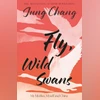 "Fly, Wild Swans: My Mother, Myself and China")
premium
Fly, Wild Swans: My Mother, Myself and China
5 min read Last Updated : Oct 09 2025 | 11:55 PM IST
Listen to This Article
Fly, Wild Swans: My Mother, Myself and China
by Jung Chang
Published by William Collins
309 pages ₹599
Best known for her 1991 family autobiography, Wild Swans: Three Daughters of China, Chinese-born British writer Jung Chang is back with a follow-up to that popular book. Wild Swans, an epic personal history of the author, her mother and grandmother, was a book that defined a generation and offered a first-hand view of the depredations of Mao Zedong’s era. Fly, Wild Swans brings the story of her family as well as that of China’s over the years up to date. In many ways, the book is Ms Jung’s tribute and love letter to her mother, her “guardian angel”.
In Wild Swans, Ms Jung wrote, among other things, about her grandmother’s excruciating foot-binding as an infant, Mao Zedong’s rule, especially its last decade, the horrific Cultural Revolution during which her Communist parents were subjected to painful humiliation, and how Deng Xiaoping finally brought the Mao era to an end. Around this time, a 26-year-old Jung became one of the first Chinese to leave Communist China for the West in 1978 — which she describes as being “out of the cage”.
Though she lives in London, Ms Jung’s life was still deeply entwined with her birthplace. She visited her mother who continued to live there, and travelled around the country to research her books. “The country has been turned upside down many times by tempestuous changes,” writes Ms Jung in the book’s Prologue. Her books talk primarily about her and her family’s experiences dealing with the regime during those tumultuous years. Over the last 120 years or so, present-day China has grown from a crumbling state to a strong global power.
When Ms Jung’s mother visited her in London, she told her many stories about her family in the form of 60 hours of structured recordings. That became the seed which gave birth to Wild Swans. Even though the book has sold more than 15 million copies worldwide, and been translated into more than 40 languages, it is still banned in Ms Jung’s own country.
In Fly, Wild Swans, Ms Jung writes about how her parents, who were working with Mao’s Communist Party, soon became disillusioned with it — especially during the Great Famine between 1958 and 1961 when some 40 million people died of starvation. They understood that there was no space in the Party for values such as equality, kind treatment of women and comradely warmth. But they soon realised that once someone joined the Party, there was no exit — a crucial fact that kept the Party going. In 1966, Ms Chang was 14 years old when Mao launched the Cultural Revolution, with its horrific legacies of atrocities.
When her father wrote to Mao to protest against the Cultural Revolution and asked him to stop the violence that was wrecking so many lives, he was imprisoned. Subsequently, he was beaten and tortured repeatedly, and her parents faced endless denunciation meetings and periodic detentions. Nobody dared to clear someone who had criticised Mao.
In 1968, a 16-year-old Jung wrote her first poem to express her feelings about the society in which she was living. When some Red Guards came to raid their house, she was forced to destroy her poem and flush it down the toilet. “One thing that turned me viscerally against the regime was that nearly all books were condemned as ‘poisonous weeds’ and bonfires were lit across China to consume them,” she writes. The Cultural Revolution had poisoned everything, including love, she added. During those years, having a love affair was deemed an unspeakable sin. “‘Sex’ was a dirty word, and even sexual love was unmentionable.”
Naturally, the last freedom Ms Jung was determined to taste in Britain was sexual liberation. Arriving in London, she began a relationship with an Englishman. She then met a Singaporean pianist and professor, but Chinese were not allowed to marry foreigners at the time. After much struggle, they married in 1982. Anglo-Irish historian Jon Halliday became Jung’s second husband, with whom she co-wrote a biography of Mao. Though it played a significant role in the world’s understanding of one of the most important figures of the 20th century, it received mixed reviews and some of its facts were questioned.
Soon after Mao’s death in 1976, his closest associates were arrested and imprisoned. People started celebrating, as Deng launched a comeback, and China began to gradually change under the economic reforms he introduced. “Mass political victimisation would stop, and improving people’s living standards was to be the Party’s top concern,” writes Ms Jung. Deng restarted proper education in the country after more than 10 years, and books that had disappeared for over a decade reappeared in bookshops. After being shut for 15 years, tea houses reopened in 1981. In the early eighties, people in China could also express their love more openly.
After the publication of Mao’s biography, Ms Jung realised that she had to be prepared for the worst, because Beijing would view her as a kind of enemy. In 2024, when her mother had a haemorrhage, Ms Jung was unable to visit her, and could only communicate with her heartbreakingly over video calls.
The reviewer is a New Delhi-based freelance writer
Topics : Book Reviews books Literature