


M S Swaminathan: Celebrating an icon of India's Green Revolution
As one reflects on Swaminathan's life and time, it is worth wondering if India could produce towering figures like him today
 "Book")
premium
Swaminathan’s approach towards agriculture and food is remarkable.
5 min read Last Updated : Aug 08 2025 | 11:07 PM IST
Listen to This Article
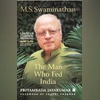
M S Swaminathan: The Man Who Fed India
by Priyambada Jayakumar
Published by HarperCollins
Pages: 323
Price: ₹699
August 7 was the birth centenary of M S Swaminathan, one of the architects of the Green Revolution and more recently known for delivering the landmark report of the National Commission of Farmers — popularly known as the Swaminathan Commission report. Priyambada Jayakumar’s biography of Swaminathan is a celebration of the person and his work and is timed well to coincide with the centenary year commemorations.
As one reflects on Swaminathan’s life and time, it is worth wondering if India could produce towering figures like him today — people who have not only worked in their narrow field of specialisation with depth but have had a larger than life influence on society at large. Swaminathan’s generation included contemporaries such as Verghese Kurien, Vikram Sarabhai, and Homi Bhabha. All these visionaries benefited from a supportive political environment under leaders such as Indira Gandhi, who provided the necessary space and influence to further their contributions.
Swaminathan’s approach towards agriculture and food is remarkable. His research spanned two ends of the spectrum: starting with research in genetic strains to develop high yielding variety seeds in wheat that brought about the Green Revolution and moving towards sustainable and organic agriculture. One is completely embedded in science and technology and the other in traditional systems of sustainability.
Clearly, Swaminathan did not see this as a dichotomy. Or if he did, the book does not capture this aspect of his scientific outlook. We also know from public sources that Swaminathan had a somewhat nuanced view of genetically modified crops and was cautiously sceptical about them. It would have been important to capture this ambivalence towards cutting-edge agricultural science research by someone who had worked on plant genetics in the early part of his career and found a miracle solution for India’s food security. This is a missed opportunity by the author, who had access to Swaminathan when he was alive and the people around him.
This omission highlights the key limitation of this biography. It is an easy and feel-good read. With some minor hiccups, Swaminathan appeared to have a fairytale-like existence — moving from one successful assignment to the other, solving multiple problems in multiple locations while navigating a world of conflicting interests.
In the enthusiasm to celebrate Swaminathan (which we ought to), the book papers over the problems he may have had and the compromises he had to make — or the price he had to pay for not making those compromises. No visionary could have had a smooth run through a career. But we are made to believe that Swaminathan was this charmer who lived from one success to another, so a book about him merely has to catalogue his achievements. We read a biography not as a Wikipedia page, however, but to understand the nuances of how one navigates a complicated life in balancing the personal and the professional, and working in the corridors of policy and politics.
The book starts with a touching note of the author as a child interacting with Swaminathan, and those pages bring out much of the personality and the warmth of the scientist as a human being. Alas, the author’s note was a false start because the main text of the book lacks this personal touch. It lapses into a monotone, generally describing Swaminathan’s professional career (but for the first few pages of his childhood) and his achievements. It does capture flashes of his personality, particularly in his commitment to going into the fields and interacting with farmers at every opportunity. But family members, including Mina Swaminathan, his wife, a fine professional in her own right, play only cameo roles.
The only significant pushback that Swaminathan seems to have faced in his professional career was from VKRV Rao, a Planning Commission member who did not see merit in investing resources in the research Swaminathan proposed. Obviously, he must have faced more roadblocks. The biography would have done well to capture these. We also do not get a sense of the personalities who were part of his team. Apart from the collaboration with Norman Borlaug and cross-disciplinary collaboration with Vikram Sarabhai and the mention of Kurien, there is little detail of the core scientific team that stood by Swaminathan during his early research.
These shortcomings notwithstanding, this is an important book. In the context of India’s current trade negotiations and the conflicts that we are facing on the foreign policy front, it is important to acknowledge the fact that we are negotiating on strong ground. That we have food security is no mean factor contributing to that confidence. India could deal with the Covid-19 crisis by providing free rations to a large part of the population; that it can still do so is not due to a financial miracle but the agricultural miracle. The credit goes to Swaminathan for this. We certainly need to thank him for the bread on our plates (even if it is an unleavened flatbread), and then spare a thought for Kurien for the butter.
The reviewer is a Professor at the Centre for Public Policy, Indian Institute of Management, Bangalore. (mssriram@pm.me)
Topics : Book Reviews Book agriculture economy