Ghazala Wahab theorises the contemporary with the tools of history and a sprinkling of current politics. Her Hindi heartland is a region familiar with the rise and fall of empires. It is here that Hinduism, Buddhism and Islam have clashed and coalesced. She unravels not only the wars and invasions but also the ideas, beliefs, and follies of the victors in varied time frames, including the most recent. The big idea is to grasp where we are today and how we arrived here.
The Hindi heartland embraces the vast expanse between Rajasthan and the states of Uttar Pradesh, Madhya Pradesh, and Bihar, now subdivided into Uttarakhand, Chhattisgarh and Jharkhand. However, the narrative wanders beyond the heartland, to Lahore onwards to Iran and Afghanistan, to Indore across the Vindhyas, into the Maratha enclave, and to Chittagong in the east. The chronicle is enriched with fascinating stories. The timespan is from the early Sultanate period to present-day North India, winding through the Mughal and British eras.
The author belongs to Agra, once the capital of the Lodi and Mughal Empires and soaked in its own syncretism of art and aesthetics, spawning Ganga-Jamuni Tehzib. The book explores the permutations and combinations of caste, class, and community, which have historically yielded erratic outcomes to the powers that be. Agra’s surrounding areas are today a hotbed of right-wing Hindu politics despite substantial Dalit and Muslim populations.
The book’s genre-bending narrative is neither wholly academic nor fully journalistic. The author is very much present in the book, popping up now and then with her entertaining interviews with peculiar characters she encounters on the way to Banaras, Ajmer, Ayodhya, or anywhere. She lets her characters speak without being judgmental. Intermittently, you will meet the likes of Tulsidas, Meer, Ghalib, Dinkar, or Majrooh Sultanpuri. A section covers culture, language, and society.
Ms Wahab regales you with stories of wars, treaties, kinships and betrayals. The convergence of cultures is central to the narrative. Persian musical notes like Yamani and Kafi melded into the Indian Raga system, a la Amir Khusrau, and are still visible in our poetry, dance and classical singing. Sufis had a great influence on the region’s thought and culture. Even the Sultanate rulers indulged Sufi saints to win the trust of the majority while distancing themselves from Islamic hardliners. It wasn’t a coincidence that the green shoots of the Nirguna Bhakti movement also appeared around this time.
You view the Mughals in a better light when the author compares them with the other Central Asians and, particularly, the British. Good, bad or ugly, the Mughals ruled with an iron fist, and splurged their extortions within India where they lived and died. They built magnificent monuments and facilitated cultural fusion in art, architecture and language. They were not like the marauders from Central Asia who took away their booty on horseback and bullock carts. But the British surpassed all other robbers. They transported India’s wealth every day for over a century, in trains and steamships. In scale and distance, even their human trafficking as indentured labour was breathtaking.
The British impoverished the prosperous Indo-Gangetic area, making starvation a common occurrence. In her words: “The British rapaciousness gradually whittled away all three pillars of the Indian economy —agriculture, manufacturing and services — through a combination of incompetence, greed and cruelty.” In 1750, India was producing 25 per cent of the global manufacturing output, which fell dramatically to a mere five per cent by 1900. The East India Company also degraded the economy by de-skilling our famed artisans. They pushed cash crops, particularly opium and sugarcane, even though the price would hardly cover production costs. India’s food output consistently fell, leading to frequent famines.
The book will be invaluable for those who never studied history as a subject and are intrigued by its competing narratives today. A minor issue is its sourcing, particularly in the second half. In some places, news reports seem to be doing the heavy lifting. The history of India has many schools — nationalist, colonial, Cambridge, Marxist and Subaltern — but the author tilts heavily, even uncritically, towards the Marxist school. The conclusion is a bit rushed for the book’s relaxed style of storytelling and sometimes reads like a news report.
This does not take away the fact that the book is a delight to read. Ms Wahab chronicles populism, autocracy, and the criminalisation of dissent in today’s India without absolving the grand old party of its part in the sectarian mess. The author dispels many myths and offers a fresh perspective on India’s Hindi heartland.
The reviewer heads Common Cause, known for its PILs and work on police accountability


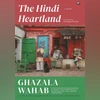 "The Hindi Heartland")

