


The Stoic Capitalist: Ancient Greek philosophy meets the American Dream
The ancient Greek philosophy lives on as Cognitive Behavioural Therapy. Here's how to use its principles to handle real-life situations and build a life of your dreams
 "Book")
premium
5 min read Last Updated : Jul 14 2025 | 10:24 PM IST
Listen to This Article
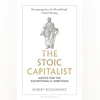
The stoic capitalist: Advice for the exceptionally ambitious
by Robert Rosenkranz
Published by Bloomsbury Business
262 pages ₹499
What does it take to be within the top 0.1 per cent of the population who are exceptionally ambitious, like the author, a self-made capitalist-philanthropist? Following the precepts of Stoicism, an ancient Greek philosophy, which distinguishes emotion from reason, perception from facts, builds the soul, and guides daily actions is one way.
Stoicism lives on today as “Cognitive Behavioural Therapy” which changes maladjusted behaviour by altering negative perceptions and examines emotional responses rationally to deal with immediate needs. This book adopts an attractive narrative in the Stoic tradition of voicing principles as catchy, easily memorised aphorisms (disguised here as 42 chapters, some just two pages long) to guide real life actions.
Your parents can only afford under-served city schools. Work hard and excel, your teachers will bail you out and manage scholarships for you as the author’s teacher did. You are poor and have no family role model. Read biographies in public libraries and choose your role model. Identify real life role models. The author did this at age 13 to cull inside information from brokerage employees, piquing their curiosity enough to share tips on when to buy and sell, thereby saving his family from certain loss in a “pump and dump scheme.”
You face prejudice, as the author did at Yale. So what? A stoic adapts to what she cannot control (the reactions of others). Jews have assimilated for millennia. Years later the author extends his assimilation strategy by marrying a Christian, art historian and curator — his muse — to complement his yen for antique Chinese art acquisitions, which provide him a sense of refined contentment whilst also being profitable. The author has a yen for contrarianism — he is an American capitalist advising that America “give China face” by acknowledging its manufacturing expertise, technological smarts and extended imperial history.
On the choice of profession. Study law to refine your mind but do not practise law. You make more money in financial markets. It is cheaper to hire the best lawyers. Consider that between 1965 and 2023, the starting salaries for top Harvard Law School graduates increased 28 times, Law school fees increased 31 times, the rent for a one-bedroom apartment off Park Avenue increased 30 times. Second piece of advice. Work to learn your trade inside out. Once done, establish your own company. For a lawyer or a broker working in a firm, a salary would be a fraction of the customer billing. As a young lawyer, the author’s billing was $500 for a $6 million tax saving by the client.
On how to buy profitable stocks. Study success closely. Choose firms in low competition areas. Understand the trend in tax laws — regulatory changes feed strongly into profitability. Become a protégé of an investment idol as the author was for Leon Levy, an unorthodox Wall Streeter at Oppenheimer & Co who preferred to learn rather than stand on protocol, preferring reporters to editors in a newspaper, a chief economist to the president at a bank. These earthy encounters gave him unusual insights for believing, with Hyman Minsky, that credit policy did more to create bull markets and crashes than the economic dogma of cyclical movements being a consequence of prices moving towards a stable equilibrium.
Having a diversified set of friends helps. The author shared an admiration for Ayn Rand with Charles H Brunie, one of the four partners at Oppenheimer. In turn Charles was friends with Alan Greenspan and Milton Friedman — who Charles and the author believe, held the key to accelerated American growth as opposed to classical Keynesianism, which sparked a decade of inflation and low growth by 1980. Mike Milken — the junk bond king who earned $550 million in 1987 — was another, who upended the staid bond market rigidly regulated by ratings from Moody’s or S&P. He conceived a high-interest rate market for below investment grade bonds, to finance newcomers, who sans ratings, were unable to get debt finance to mount hostile takeovers of established, but poorly run companies, thereby perpetuating inefficient capitalism.
For the wealthy, his advice is to be prepared for death with a tightly drafted will. His first wife couldn't care less who benefitted from her estate, even if it devolved to the government by default—a shocking case of voluntary double taxation for a capitalist who earned every bit of his after-tax fortune.
The author believes reason, not blind faith, must dictate actions. Stoics value time and calmly accept death as inevitable. Medical science has extended life spans and is extending the “wellness span.” The author’s philanthropy funds wellness span extension research, which could potentially make human life near perpetual, devaluing time and upending Stoic precepts. Undeterred, he benefits from anti-ageing research to reduce memory loss, ski better and play a meaner game of singles tennis, thereby marrying selfish capitalistic philanthropy with Stoic precepts of not wasting even a second. If you are at an inflection point — a student starting work, looking for a career change, stuck in a midlife crisis or suffering from retirement blues, do not miss reading this book. You might not end up a billionaire, but you might be happier without being one.
The reviewer is a distinguished fellow, Chintan Research Foundation, and a former IAS officer and World Bank official
Topics : Book Reviews Book Greek