


The voice of farmers: How Subramaniam backed Swaminathan's seed dream
How C Subramaniam's political backing helped MS Swaminathan secure funds for hybrid seed trials, setting the stage for India's Green Revolution and agricultural self-reliance
 "Man who fed India")
premium
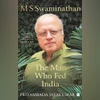
MS Swaminathan: The Man Who Fed India
7 min read Last Updated : Aug 01 2025 | 1:16 AM IST


Listen to This Article
MS Swaminathan: The Man Who Fed India
by Priyambada Jayakumar
Published by HarperCollins
Help came unexpectedly for [MS] Swaminathan and his team from a crucial player in the Shastri Council of Ministers. C Subramaniam or CS, as he was popularly referred to, was a Gandhian who took part in the Quit India movement and was even imprisoned for it. He was a member of the constituent assembly and participated in the drafting of the Constitution. He was a minister for education, law and finance in the C Rajagopalachari and K Kamaraj-led Cabinets in the erstwhile state of Madras. Subramaniam won a Lok Sabha seat in 1962 and was a Congress veteran from Tamil Nadu and a highly successful Minister of Steel, Mines and Heavy Engineering in Nehru’s cabinet.
On 9 June 1964, CS received a call at 10 pm from Lal Bahadur Shastri who had just taken over as Prime Minister. Shastri wanted Subramaniam to take over the decidedly less-glamorous Agriculture and Food ministries! This move clearly flummoxed Subramaniam because he considered himself a highly successful Steel Minister! Shastri had found absolutely no takers for the Ministries of Agriculture and Food and was heavily banking on the eminently qualified Subramaniam to bail him out of a tight corner. Neelam Sanjiva Reddy had almost accepted this ministry but changed his mind at the last minute.
Shastri’s faith in Subramaniam as Minister of Agriculture and Food was not misplaced as history would prove. Both Shastri and Subramaniam were firm believers in the Nehruvian tradition of the future belonging to science. Subramaniam especially was a very strong advocate for science being used in all areas not just agriculture, much like Shastri himself. Subramaniam crucially recruited B Sivaraman, a brilliant civil servant who had vast field experience in agriculture and irrigation in Orissa, as his agriculture secretary in May 1965 (much against Biju Patnaik’s wishes who wasn’t willing to let him go!) after taking over as Minister for Agriculture and Food. C Subramaniam lobbied politically for Swaminathan and his scientists in the Parliament while B Sivaraman was the details man.
It was this trio of the Ss — MS Swaminathan the scientist; C Subramaniam the politician and Minister of Agriculture; and B Sivaraman the civil servant (incidentally all from Tamil Nadu) who put together a plan that would turn India’s fate from that of a begging bowl to a bread basket and from abject scarcity to one of absolute abundance.
The first thing Subramaniam did after he took over as the Minister of Agriculture and Food was to call about twenty agricultural scientists to Krishi Bhawan (offices of the Ministry of Agriculture) in New Delhi in August 1964 and ask them each how they proposed to solve the country’s food shortage. He wanted to take India’s most pressing problems to her scientists and get them to come up with solutions. He was the first minister to actively seek out the agricultural scientific community to provide him with answers.
When it was his turn, Swaminathan spoke powerfully about the new technology and hybrid seeds that they had at their disposal which [American agricultural scientist] Norman Borlaug had sent. He was convinced that based on their trials in IARI [Indian Agricultural Research Institute] controlled plots, if these seeds could be sown in the fields of actual farmers, the yield stagnation in India could be overcome on a scale not witnessed before.
‘What is stopping you then, Swaminathan?’ Subramaniam looked intrigued. ‘Money, sir. We don’t have any!’ came the prompt reply.
‘I had submitted a proposal earlier which the Ministry refused to pass citing a lack of funds and more importantly, little belief in the new technology itself. The dwarf Mexican seeds provided by Dr Borlaug have proven they work but the Ministry had their doubts and that led to inaction on their part. Every year we are routinely humiliated by the import of PL 480 wheat from the United States. We need to break this debilitating cycle of our ship-to-mouth existence. Importing food is like importing unemployment. Seventy per cent of our people are employed in agriculture so when we import food, we are actually supporting farmers in other countries,’ Swaminathan responded passionately. ‘Developing a hybrid seed variety on our own is exceedingly time consuming as well and not entirely feasible within our current timeframe. We have tried, I can assure you. It usually takes about a decade at least, if not more, to develop a new seed variety, which is essentially considered a scientific breakthrough, and which will yield more grain and will simultaneously also be disease free. That is a tall order. We then need to have innumerable trials to disseminate this new information to the farmers and all relevant stakeholders concerned through various partner and extension agencies. We simply don’t have that kind of time. Since Borlaug had the technology readily available we asked to use it in our fields and he was magnanimous enough to let us use it. It took him a good part of a decade to perfect this technology. I wanted to use this opportunity to then “purchase time” to leapfrog in terms of spreading new varieties. But some in the government see it as an American ploy to control our fields and farmers. That is simply not true. They forget that we approached Dr Borlaug to share his miracle seeds with us and not the other way around. He finally visited India after several requests were made. There is also a fear that the new Mexican variants will bring with them new diseases. This is completely unfounded as we have sowed them in IARI plots nationwide and there hasn’t been a hint of disease. We have every reason to believe that we are on the precipice of a massive breakthrough, but we require vital and immediate funding to take it to the farmers.’
Subramaniam allowed Swaminathan to continue speaking without interrupting him. ‘In my last attempt, we were just not able to convince the Ministry to get 1,000 National Seed Demonstrations approved at a cost of ₹500 per hectare to prove to them the efficacy of this new scientific breakthrough in actual farmers’ fields. If agriculture goes wrong, nothing else will have a chance to go right. We forget that farmers are often the best judges of the value of scientific work and scientific progress especially if they are able to use it in their own fields. They can then see the magic unfold for themselves. They are not merely hapless beneficiaries of the state. I am therefore particularly keen to hold the demonstrations in the fields of resource poor farmers only as opposed to the rich landholders because anything demonstrated in the fields of rich farmers will then immediately be attributed to their affluence and not to new cutting-edge technology deployed in the fields.’
After a moment of silence following his speech, Swaminathan finally heard the words he had been hoping for from Subramaniam. ‘Thank you for your thoughtful presentation, Swaminathan. I would request you to immediately hand over the file to young Venkatraman who is sitting here with us on this table and I shall see what I can do to help you.’
Two days later, to Swaminathan’s immense surprise, the file was cleared unconditionally and the stage was finally set for the crucial National Seed Demonstrations in the fields of actual farmers…
Excerpted from MS Swaminathan: The Man Who Fed India by Priyambada Jayakumar with permission from HarperCollins