Likhachev is part of the delegation accompanying Russian President Vladimir Putin on a high-profile visit to India.
Rosatom is the supplier of key equipment and technology for the project being jointly developed with Nuclear Power Corporation of India (NPCIL).
The plant already has two units of 1,000 Mw capacity each operational at the site and the companies plan to gradually expand the capacity to 6,000 Mw soon.
“Units 3 and 4 of Kudankulam nuclear power plant are at a high stage of readiness. Next year, we will begin commissioning operations directly at Unit 3, and year after year, we will put into operation Units 3, 4, 5, and 6 of the Kudankulam unit,” Likhachev said on the sidelines of the 23rd India-Russia Summit at Hyderabad House in New Delhi.
He said the existing units of the power plant are operating at full capacity, providing stable power supply, and their output exceeds the nominal level, above the declared 1,000 Mw, which has pleased the Indian side.
“This is Russian technology, the VVER-1000. It is, in fact, serial, almost conveyor-style construction. And, this cooperation will continue to develop,” Likhachev said.
India is one of the few countries, like Russia, which possesses a full-cycle competence in nuclear power — from uranium mining and processing to decommissioning of a plant.
The country currently operates 8,700 Mw of nuclear power generation capacity and plans to ramp it up to 100 Gigawatt (Gw) by 2047.
“Since the late 1960s, nuclear electricity has been on the grid (in India), and the first solutions were Western, primarily North American. At a certain stage, the Indians faced limitations — first of all in fuel supplies and uranium products,” Likhachev said.
During the discussions at the India-Russia Annual Summit on Friday, the two sides welcomed the progress achieved in implementation of the Kudankulam unit. This includes construction of the remaining units and adhering to the timeline for supplies of equipment and fuel.
They noted the importance of further discussion on the second site in India for the nuclear plant. India will strive to finalise the formal allotment of the second site.
The two nations also agreed to accelerate technical and commercial discussions on the Russian design VVER. They also agreed on joint development of nuclear plants, localisation and joint manufacturing of nuclear equipment and fuel assemblies.
The two sides also discussed the possibility of cooperation between their companies on oil and oil products, oil refining and petrochemical technologies. The two countries also agreed on tie-ups in oilfield services, upstream technologies and related infrastructure, LNG and LPG related infrastructure, underground coal gasification and nuclear projects.
They also noted the importance of expeditious resolution of issues related to investment projects in this area. They agreed to resolve the concerns faced by their investors in the energy sector.


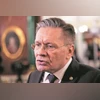 "Alexey Likhachev, director-general, Rosatom")