


Home / India News / The 'de-extinction' of the dire wolf could be both a gift and a curse
The 'de-extinction' of the dire wolf could be both a gift and a curse
Despite its potential for conservation, questions around the consequences of resurrecting extinct species remain
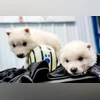 "Genetically modified wolf pups Romulus and Remus, two of three successfully bred by reconstructing a genome from the ancient DNA of fossils from the dire wolf that had been extinct for over 12,500 years by Colossal Biosciences (REUTERS)")
premium
Genetically modified wolf pups Romulus and Remus, two of three successfully bred by reconstructing a genome from the ancient DNA of fossils from the dire wolf that had been extinct for over 12,500 years by Colossal Biosciences (REUTERS)
6 min read Last Updated : Apr 11 2025 | 10:48 PM IST
Listen to This Article
A recent announcement by Colossal Biosciences, the Texas-based genetics company, that it has “de-extinctioned” the dire wolf, has led to headlines and controversy. In pop culture, dire wolves are associated with the “Game of Thrones” serial, just as tyrannosaurus are associated with “Jurassic Park”.
Colossal has been working since 2021 to bring back iconic extinct species like the mammoth, the Tasmanian tiger and the dodo. While these efforts grab headlines, its genetic research may help maintain biodiversity and prevent the extinction of many severely endangered species.
Colossal Biosciences was founded by tech entrepreneur Ben Lamm along with pioneering Harvard geneticist George Church, and other eminent scientists like Beth Shapiro. It has funding from hardheaded mainstream venture capitalists like Breyer Capital, Draper Associates, Animal Capital, At One Ventures, Jazz Ventures, Bold Capital, Global Space Ventures, Climate Capital, Winklevoss Capital, etc. It also has funding from bitcoin millionaires and movie moguls like Thomas Tull, who funded “Dune” and “Jurassic World”.
The dire wolf was a massive canine, which went extinct around 11,000 years ago. Colossal says it has bred three dire wolf pups, Romulus, Remus, and Khaleesi.
How the wolves were brought back
It analysed dire wolf DNA extracted from a 13,000-year-old tooth and a 72,000-year-old ear-bone, compared that genome to the gray wolf genome and identified key differences. Then it did cut-and-paste gene editing using CRISPR Cas9 to alter the gray wolf’s genome.
Some 20 gene edits were made in 14 genes to create a hybrid that looks like the dire wolf. The three pups are doing well and the two older boys, Romulus and Remus (who are six-months old), are already as heavy as the average adult gray wolf, which hits around 35-40 kg as a mature two-year-old.
Dire wolves (Aenocyon dirus) were larger and heavier than the gray wolf (Canis lupus) with stronger jaws. Genome analysis indicates the species diverged over 5.7 million years ago. This implies the dire wolf could not have inter-bred with the gray wolf, which is its closest living relative.
The three pups are more than 99.5 per cent gray wolf, according to chief scientist Shapiro. Humans share 98.9 per cent of DNA with chimpanzees, so genetic and physical differences can be considerable even with such close matches. The gray wolf genome has over 2.4 billion DNA base-pairs, so 14 gene edits barely alters the animal.
Colossal hasn’t released the dire wolf genome. But the pups with white coats, large size, more powerful jaws, muscular legs, etc., obviously differ visually from gray wolves. These differences result from tiny tweaks in single nucleotide polymorphisms (SNPs), which were edited into the genome of a gray wolf using CRISPR Cas9 technology. The resulting modified cells were used to create embryos, implanted into surrogate domestic dogs.
The editing was very tricky. Genes have multiple effects. The press release says the dire wolf has three genes that code for a light coat, but in gray wolves, these also result in deafness and blindness. Instead of using those three genes, Colossal engineered two gray wolf genes to shut down black and red pigmentation, leading to the light coat.
Experts disagree with the claim that these animals are revived dire wolves under any normal definition of the species. They are better described as genetically modified hybrid grey wolves, since hundreds of thousands of genetic differences exist between real dire wolves and grey wolves.
A total of 45 embryos were transferred into the wombs of two domestic dogs. Two transfers were successful. After 65 days of gestation, Romulus and Remus were born. A few months later, the procedure was repeated, leading to the birth of Khaleesi. All three were born by caesarean section. The three pups are not being released into the wild and will live on an undisclosed 2,000-acre facility.
What it means for conservation
Dire wolves were apex predators across North America during the Pleistocene, between 2.6 million to 11,700 years ago. They evolved to hunt large animals and may have gone extinct because smaller, more nimble predators hunted smaller prey more efficiently.
The project is a remarkable demonstration of genetic engineering. It proves creating viable embryos by extracting DNA from ancient remains, accurately sequencing it, identifying meaningful genetic variations and editing these, is possible.
The techniques could obviously find applications in conservation, and for species suffering from inbreeding and genetic issues. About 50 per cent of all species could go extinct by 2050, given climate change, loss of habitat, etc.
The ability to accurately edit traits in genomes is invaluable for applications across health, agriculture and ecology. Colossal’s demonstrations may help preserve bio-diversity and also in developing super foods, etc.
Colossal hopes to breed a similar hybrid mammoth by editing Asian elephant genomes. In March, it exhibited 38 woolly mice, which demonstrated that it has figured out how to edit genes to create the mammoth’s shaggy coat and fat deposits. It may start implanting elephant embryos by 2026.
It is also working on the dodo and the thylacine (see also: https://mybs.in/2cCJmxc) as well as trying to shore up populations of the highly endangered pink pigeon of Mauritius and the endangered red wolf of North Carolina. It is also trying to create a genetic DNA bank where genomes may be stored.
At an estimated valuation of $10 billion, Colossal has the resources for R&D. It has partnered with many conservation organisations, and it says it has permission to release dire wolves (if it chooses) onto Native American tribal land in North Dakota.
Of course, there are plenty of ethical and environmental issues centred on the feasibility and consequences of resurrecting extinct species. The ability to do so could be a massive step forward in preserving biodiversity, and in developing new designer drugs. But it could also alter environments forever in terrible ways, as we’ve seen when rabbits and cats were introduced into Australia, and pythons into Florida. One can scarcely contemplate the consequences if somebody decides to experiment with human genomes.
Topics : wildlife heritage conservation Animals