Wednesday, December 31, 2025 | 11:31 AM ISTहिंदी में पढें
Business Standard
Notification Icon
userprofile IconSearch

A blot on democracy: Why we must not forget lessons from the Emergency

In a democracy, a free press does not only fulfil the function of educating people and offering them a range of ideological choices and opinions
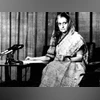
A blot on democracy: Lessons of the Emergency must not be forgotten
premium

Fifty years on, the Emergency will be remembered by an ageing generation of people that lived through it.

Business Standard Editorial Comment Mumbai

Listen to This Article

June 25 marks the 50th anniversary of a 21-month period in independent India’s history of authoritarian excesses, activated by a constitutional suspension of civil liberties and the collective failure of institutional checks and balances. The Emergency was rubber-stamped by the President, the Cabinet, and Parliament under the specious threat of external aggression and internal disturbances to India, and given heft by an infamous Supreme Court Bench judgment that overrode the protections of habeas corpus. Together, these retreats from democratic values by those that should have defended them enabled the regime under Prime Minister Indira Gandhi to detain opponents indefinitely and with impunity, and muzzle the press in an unprecedented manner. Shielded by Article 352, Indira Gandhi embarked on a drastic programme of population control that violated the civil rights of thousands of families, and a slum demolition project, which resulted in police killings of protesting residents. This saga of human rights infringement, conceived not by elected officials or the bureaucracy but by the extralegal exercise of power by her son, was virtually unknown to large sections of Indians, thanks to the comprehensive news blackout and drastic press censorship.   
 
At a time when commentary is gaining traction about insidious attempts to diminish the freedom of the press, it is worth remembering the extreme pressures that were brought to bear on India’s Fourth Estate during the Emergency, as well as its consequences. These oppressions included cutting off electricity to major newspaper houses in New Delhi within hours of the Emergency being declared to prevent them from printing. Not surprisingly, in an atmosphere of sustained intimidation, where arbitrary imprisonment without bail was the norm, many editors chose the line of least resistance. The more intrepid tested the boundaries of authoritarianism, such as the Indian Express, which famously published a blank opinion page as mute protest against the suppression of free speech. With the principal source of information emanating from state-controlled Doordarshan and All India Radio propaganda, ordinary Indians’ understanding of the degree of repression was limited. In a democracy, a free press does not only fulfil the function of educating people and offering them a range of ideological choices and opinions. It also plays a critical role for the government of the day. Speaking truth to power has the additional, if uncomfortable, virtue of offering the ruling regime clues to what people may be thinking. Silencing these voices was the fundamental mistake that Indira Gandhi made with her press censorship. Lulled by only positive opinions by those around her, she chose to call elections, which unseated her and her party from power. 
 
Fifty years on, the Emergency will be remembered by an ageing generation of people that lived through it. For Indians born from the 1990s onwards, the surging national self-confidence and prosperity of post-liberalisation India may swamp an understanding of this dark period. But its legacies can cast a long shadow, since the institutional structures and culture of governance remain unchanged. It took till 2017, for instance, for the Supreme Court to override the 1975 restrictions on habeas corpus. Between June 25, 1975, and March 21, 1977, the Emergency made a mockery of the foundational ideas of the Indian republic. It demonstrated the dangers of wilfully weakening the guardrails of democracy by those elected to protect them. Those lessons should not be forgotten today.