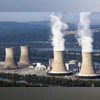
The nuclear-energy declaration is particularly interesting, partly because the role of nuclear power in the green transition has been contested. Even within the European Union, the two major powers of France and Germany have diametrically opposing points of view on the subject. Germany, under former Chancellor Angela Merkel, began phasing out its nuclear power plants more than a decade ago. France, meanwhile, still relies on nuclear power for a large proportion of its energy generation. The German stance reflects also the position of many green activists, who view nuclear power generation as fundamentally unsafe. But it is clear that this side of the argument is a losing one in principle. The International Atomic Energy Agency drafted a statement at COP28, alongside multiple countries, making it clear that “net zero needs nuclear power”.
No emission-reduction targets are possible without scaling up nuclear power: Even today, after years of mothballing plants and limited investment, only 400 or so nuclear reactors in 30 countries still produce 10 per cent of the world’s power and represent 25 per cent of global low-carbon generation. More importantly, in the absence of economical power-storage solutions at a national or grid level, the only way in which reliable 24-hour power can be ensured, given that wind and solar are plagued by intermittency, is through hydropower or nuclear energy. Any permanent alternative to fossil fuels must also include these two power sources, regardless of their other problems.
What is of concern, however, is India’s unwillingness to sign any of these declarations. In some cases this may be because of references in the text to the need to phase down coal generation. This is an unnecessary own-goal from the drafters of such declarations. Even so, India must take the principles in these declarations on board. India’s nuclear-energy programme has seen too little energy. The clauses forced on the Civil Liability for Nuclear Damage Act during its passage under the United Progressive Alliance government effectively gutted the business case for increased private investment in the nuclear sector in India. These need to be revisited urgently, particularly because they have forced India into strategic dependence on Russian provider Rosatom. Newer reactors from France and elsewhere seem too difficult to arrange under the current liability system. Regardless of whether it signs such declarations, India’s leadership in climate change will also require it to embrace nuclear power wholeheartedly.


 "nuclear power plant")