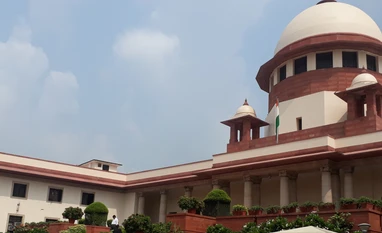
After the petition was heard at various levels, including the SC, the Bench headed by Justice Chandrachud ruled in favour of the Delhi government. Some of the observations made in the judgment and the interpretation of Article 239AA should help resolve the power tussle in Delhi. The Bench has clearly noted there is no single homogeneous class of Union Territories (UTs) and Article 239AA accords the NCTD “sui generis” status, which sets it apart from other UTs. The Union of India has control over only three entries (public order, police, and land). In effect, the NCTD is envisioned more as a state than a UT. The judgment also reiterated that the LG was bound by the advice of the NCTD’s council of ministers, except in classified entries. Notably, the court underscored the importance of the “triple chain of accountability” in the parliamentary form of democracy, where officials are answerable to ministers, who are answerable to the legislature, which is accountable to the electorate.
The other important judgment was related to the fall of the Uddhav Thackeray-led Maha Vikas Aghadi government in 2022. After some Shiv Sena legislators formed a separate group and conveyed they no longer wished to be part of the government, the governor asked Mr Thackeray to face a floor test. The judgment, however, noted the governor had no objective material to doubt the confidence of the incumbent, and a floor test could not be used to resolve internal party issues. But the court decided against restoring the status quo ante because Mr Thackeray had resigned voluntarily. The governor, however, was deemed just in calling Eknath Shinde to form the government.
Further, in another aspect, the judgment said it’s the political party, not the legislature party, which appoints the whip. The recognition of the new Shiv Sena whip by the speaker after the fall of the Thackeray government, thus, was against the law. The speaker has now been asked to recognise the whip and the leader of the Shiv Sena, duly authorised by the party. The decision of the speaker will affect the disqualification case against the Shinde faction of legislators, which would in fact decide the fate of the current government. While it remains to be seen how politics unfolds in Mumbai and Delhi — the Delhi government has already approached the SC with a non-compliance complaint against the Union — both the judgments have clearly marked constitutional limits, which must be respected in letter and spirit.


 "Supreme Court")