


Trust in elections
Faith in EVMs should be restored and maintained
 "Polling official,EVM")
premium
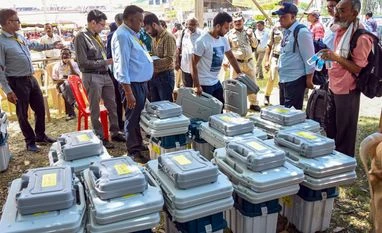
Polling officials collect EVM and other election material at a distribution centre on the eve of the first phase of voting for Lok Sabha elections, in Jabalpur, Thursday, April 18, 2024. (Photo: PTI)
Listen to This Article
India’s Lok Sabha elections, which kick off today, are a uniquely vast undertaking: They take weeks to conduct, in several phases across the country. The first phase will see voting in only 102 of the 543 Lok Sabha constituencies. As compared to the voting, the counting of votes is remarkably speedy. For the past two decades, votes have been counted swiftly and securely through the use of electronic voting machines (EVMs). Results are known within hours most of the time — a clear difference from other large democracies. Slow counts, as in the 2020 presidential election in the United States, encourage losers to challenge the authenticity of the results. EVMs have thus significantly improved the credibility of Indian electoral results. The Supreme Court is currently, however, hearing a plea from some well-regarded non-government organisations that seek to, if not restore paper ballots, ensure that each electronic vote has a paper counterpart that is counted separately. The court has reserved its judgment for now, after two days of hearing. Without prejudice to the court’s decision, it must be understood that the broader thrust of the plaintiffs’ argument might endanger Indian democratic processes.