


Unnecessary restriction
Limits on medical colleges in some states should be reconsidered
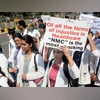 "Medical students observe black day during a protest rally against NMC (National Medical Commission) in Bhubaneswar on Tuesday. Photo: PTI")
premium
Listen to This Article
Medical education in India should be the last location for partisan and inter-regional bickering. Raising medical capacity in this country, particularly after a devastating pandemic, should surely be a national priority — one above politics. But a new regulation of the National Medical Commission (NMC), which oversees medical education in the country, has stopped the expansion of the medical college network. New colleges will not be allowed, and existing colleges are no longer allowed to add seats in states that have 100 medical education seats for each million in their population. The reasoning from the NMC is that medical education in the country needs to spread geographically, and access to medical seats should be available to all states. There is considerable regional disparity in the availability of doctors, and the NMC believes this regulation will bring down this sort of disparity. The regulator has said the courts have remarked on this regional imbalance and so it is incumbent on the NMC to address it.