My wheelchair is my legs and my family is my backbone: Avani Lekhara

In a Q&A, the shooting gold medalist at the 2020 Tokyo Paralympics talks about her difficult journey after a debilitating accident left the wheelchair-bound champion totally paralysed waist down

Avani Lekhara
Avani Lekhara
Namrata Kohli New Delhi
10 min read Last Updated : Jan 28 2022 | 8:39 PM IST
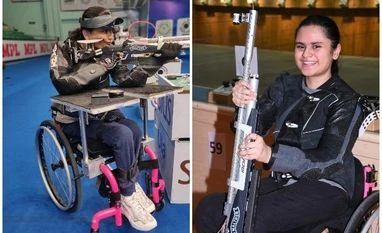
On August 30, 2021, shooter Avani Lekhara won India's first gold medal in the women's 10-metre Air Rifle Standing (SH1) event at the 2020 Paralympics Games in Tokyo, finishing with a world record-equalling total of 249.6. But her biggest victory has been over her disability. She suffered severe injuries to her spinal cord, getting complete paraplegia, and losing sensation below the waist after a car accident in 2012. Edited excerpts from an interview with Namrata Kohli:

Let’s start from the very beginning. How did it all happen? Can you share some details about that life-changing and unfortunate car accident that occurred in 2012?

I was in the fifth class. My father, who is part of the Administrative Services in Rajasthan, was posted in Dholpur. We were going from Jaipur to Dholpur, and my father was driving while I was sleeping in the backseat of the car. I am not sure exactly what happened, but the car rolled over 3-4 times. My entire family was there--mom, dad, brother and myself--and all of us were injured. My mother got injured in the back and was on bedrest for four months. My father was driving at that time, so the steering wheel hit him in the stomach and he even got stitches in the mouth. My brother got stitches in the head but somehow, it was I who suffered the maximum injuries. I had to undergo a back surgery and was bedridden for 5-6 months. I couldn’t even sit and it was a complete nightmare for me and my family.

I was a good student and loved dancing and singing, and used to participate actively in extracurricular activities. But after the accident, I was home-schooled for two years. My studies did not stop and my teacher would come home every single day. And to take the exams, I had to go to a school close to my home.

But after two years, I wanted to restart life as before. I thought I couldn't just give up on everything. My family encouraged me in everything I wanted to do and became my backbone--they never said: now you are in a wheelchair you can’t do anything. On the contrary, they said they would support me in whatever I wanted to do.

Where and how did shooting come into the picture? Were you already initiated into the sport and why did you pick up shooting?

It was the summer vacation of 2015 when we went to this shooting range very close to our house. I was not at all interested in sports or anything like that, but my father wanted me to check out the shooting and archery range.

In those days, my father was in the sports department where he saw paralympic athletes also. I tried a few shots with the bow and arrow. They were pretty decent and all hit the black circle. The coach there told me I was pretty good and could pursue shooting. However, I was not sure, as I wasn't physically strong at that time. I couldn’t even lift the rifle properly. When I tried to stretch the bow, the shot was not even going halfway to the target. When I picked shooting, I tried the pistol also, but felt more connected towards the rifle. I felt I could do this and this is my zone and then started going there on weekends. What started as a hobby gradually turned into a passion.

In August 2015, I entered my first competition at the regional level from my school. I participated with other able-bodied athletes and was super nervous. But then I told myself it’s just a game. I even won a gold medal and that’s where it all started. That’s when I felt that if I can compete with other kids of my age, I have it in me.

You say you were not physically strong. You must have worked very hard on every aspect of your fitness. Please tell us about this journey.

For you to be successful in any sport, you need to work on aspects like physical fitness and mental fitness. Then there are technical and tactical aspects. The physical part was one of the hardest for me. After the accident, I was not able to even sit properly because I had spinal cord injury. I had paraplegia in which one can’t feel or move one's legs. I couldn’t feel anything below my waist. I had to do a lot of core balancing exercises and upper body exercises so that at least I could make my upper body strong.

My rifle weighed 4.5-5 kg. At that time, I was only playing one event, which was 10 metres, and it was 1 hour 15 minutes long. Just holding the rifle for an hour and 15 minutes and then shooting was very hard for me. But then, I did a lot of holding exercises and worked out with dumbbells, thera bands--anything and everything you can think of. When you are on the wheelchair, you can’t use your legs and can only improvise the exercises while sitting. So, everything mattered a lot.

You were training to compete at the national and the international level. Was it difficult to find the right kind of equipment, training, coaches, infrastructure to hone your skills?

Yes, nothing was easy. I realised that my wheelchair is my legs. I tried to research to get the perfect wheelchair according to my size and weight and other requirements. There were many trials and tribulations. I also had to find the perfect rifle for me- something that would be a little lightweight. Some customising had to be done according to my body so that I could maintain the weight during the whole match. Like that I had to figure out a lot many things such as the stand, jacket, tables.

At that time in India, there were no specialised para-shooting coaches and equipment. It was a long and tough journey.

We didn’t know what equipment to use and what classification I fit into according to my disability. I started in 2015 and the first time we had a classifier in India was in 2016 during the Nationals. I had to wait for one and a half years to get classified. I played my second nationals and won three gold medals and then I got selected for my first international debut match. I went to UAE in February 2017 and again I got classified- the physiotherapist/classifier checked us, gave a category based on my disability and I got a card.

You saw the world as an able-bodied person and then after the accident, as a disabled person. What were the things that struck you the most, in the post 2012 phase?

I wanted to resume regular school and restart my life but finding schools was a very hard thing to do. The school authorities would say that we don’t have an accessible classroom; we can’t shift the class to ground floor for one student or if something happens to her in school, we are not responsible for it. There were a lot of things but finally I got admitted into KV (Kendriya vidyala no. 3) Jaipur.

We talk of an inclusive society but I think there is a huge gap even now. We still don’t have too many accessible schools or adequate  transportation. We are 15 per cent of the global population but are still marginalised.

What changes do you see towards inclusivity in our society after your super success and what more do you wish to see for a more inclusive world?

I would urge whoever is building anything--be it an institutional building, infrastructure, an app or technology--to think about the disabled.

Life has been different in a good way, post the medals. People have started to recognise para sports more and para-athletes a lot more. People are a little more inclusive today than yesterday.

But I feel we should be treated normally. We don’t want any sympathy and don’t seek unsolicited help. We just want you to treat us as normal as possible. Many people would come to me, see me and say: Oh! what has happened to her. She is such a cute kid. Life mustn’t be easy. All this is not required.

Also, people tend to stare at a disabled person. The reason is they have simply not been exposed to them. If you are studying in the same classroom with a couple of disabled kids, you wouldn’t find it abnormal. So, the changes need to be done at a basic and more grassroot level--right from school, able bodied and disabled should be allowed to study together. Disabled means opposite of abled but we are human beings as well, with the same desires, talent, skills. When people see someone outside of their element, they forget they might be happy in their life.

After the win at Paralympics, people have begun to recognise parasports more. There is a greater movement towards inclusivity. When I started, we didn’t have proper ramps, accessible washrooms but now I see changes happening. Buildings are being made keeping in mind the disabled. Today the shooting range where we train has become accessible. The government is also supportive. I still wish that parasports would be considered more mainstream.

What has your victory done to your sense of self-worth? What does this win mean to you?

Shooting alone has given me a lot of confidence. I was super scared when I played my first match. Even when I played internationally in 2017, I was playing against the paralympic gold medallist and I was able to win a silver medal in my first match.

Today, when I am travelling around the world on wheels and winning medals for my country, making my country proud, I feel I can do anything in this world. I feel you don’t need to become anyone or anything. You are enough for yourself. You need to realise that achievements won’t change the way you feel about yourself. You are enough with or without them until you accept who you are. Your worth is not determined by what you have to offer to anybody else.

Today I receive a lot of messages of how I have inspired others. I also went to my own school last year after winning the medal where kids came up to me and said Avani didi, we also want to be something like you, represent our country and we have started this game etc. All this feels so good and that is what real success is. If I can motivate even one person to do something in their life, my life is well earned.

People say that person said to me you can’t do this and now I have to prove them wrong. I feel that you don't have to waste your energy and efforts on proving to someone else that you can do this or that. You have to use that energy in doing something that you love and that you actually want to do. Just go out there and give your hundred percent, give your best and try to become the best version of yourself.

When not shooting, what does Avani like to do?

Well, currently I am doing an LLB law course. I am in my third year and aspiring to be a judge one day.


One subscription. Two world-class reads.

Already subscribed? Log in

Subscribe to read the full story →
*Subscribe to Business Standard digital and get complimentary access to The New York Times

Smart Quarterly

₹900

3 Months

₹300/Month

SAVE 25%

Smart Essential

₹2,700

1 Year

₹225/Month

SAVE 46%
*Complimentary New York Times access for the 2nd year will be given after 12 months

Super Saver

₹3,900

2 Years

₹162/Month

Subscribe

Renews automatically, cancel anytime

Here’s what’s included in our digital subscription plans

Exclusive premium stories online

  • Over 30 premium stories daily, handpicked by our editors

Complimentary Access to The New York Times

  • News, Games, Cooking, Audio, Wirecutter & The Athletic

Business Standard Epaper

  • Digital replica of our daily newspaper — with options to read, save, and share

Curated Newsletters

  • Insights on markets, finance, politics, tech, and more delivered to your inbox

Market Analysis & Investment Insights

  • In-depth market analysis & insights with access to The Smart Investor

Archives

  • Repository of articles and publications dating back to 1997

Ad-free Reading

  • Uninterrupted reading experience with no advertisements

Seamless Access Across All Devices

  • Access Business Standard across devices — mobile, tablet, or PC, via web or app

Topics :ParalympicsDisabledsportsOlympicsShooting

Next Story




