Jet Airways has asked the Union aviation ministry to not release its international traffic rights to rival carriers.
Doing so, says the insolvent and now-grounded airline, would affect investor bids for it and harm investor interest.
Jet had the largest share of India’s foreign air traffic even in 2017-18, at 13.8 per cent. Last week, after lender-banks rejected a request for emergency funding, it announced a suspension of all flight operations.
Traffic rights or seat entitlements on air routes abroad, are exchanged between governments through formal Air Service Agreements. These entitlements are held by the government. Airlines are granted designated carrier status and traffic rights on a particular route by the ministry, on fulfilling its norms.
Jet has been operating on international routes since 2004, being the first private airline to do so in decades, after it launched a Chennai-Colombo service in March that year. Jet’s slots at various airports have already been distributed to other domestic airlines for three months. This was done to allow new flights, after the suspension of Jet's operations led to a surge in airfares.
Jet, however, wants its foreign flying rights to be protected. The airline derived over half its revenue from international flights, with daily plying to Europe, Southeast Asia and the Gulf countries. “We understand there was a possible informal proposal in the ministry to consider a temporary allocation of Jet’s traffic rights to other Indian carriers for two-three 3 months. We earnestly request the ministry not to allow even a temporary allocation of our traffic rights,” Jet’s chief executive officer, Vinay Dube, wrote in a letter to the ministry on Tuesday. “Even a temporary allocation of traffic rights may give rise to the apprehension of traffic rights being taken away from Jet. This apprehension will be enough to break investors' confidence and dampen their interest in bidding.” SBI Capital Markets is managing a process to find an investor for Jet, in a bank-led resolution plan.
The lenders hope to conclude the bidding process by May 10.
Aviation ministry officials did not respond to text messages for a comment on the issue. The issue of allocation of Jet’s foreign traffic rights came up earlier this month.
Executives of rival airlines demanded the permission granted for Jet's foreign flights be reviewed, as the airline was operating fewer than 20 planes on domestic routes.
The current National Civil Aviation Policy allows an airline to commence flights on routes abroad only if it deploys at least 20 aircraft or 20 per cent of its seat capacity on domestic operations. The policy does not specify criteria for withdrawal of such approval.
In its letter, Jet says the rules allow an airline to hold the traffic right up to six months upon discontinuation of the service. And, that an airline has to first intimate the ministry regarding discontinuation of flights on foreign routes and share a plan regarding resumption. “If resumption is not planned within six months or it is planned but not effected within six months, (only then will) the unutilised rights be treated as surrendered and the ministry be free to allocate these to other airlines,” Dube said.

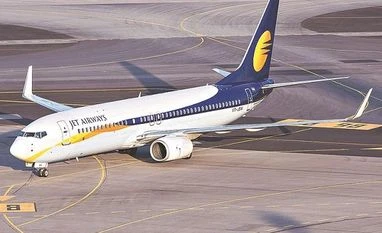 "Crisis-hit Jet Airways asks govt to protect international traffic rights")











