State-owned aircraft maker Hindustan Aeronautics Ltd (HAL) will float a tender by March inviting global aircraft makers to partner it in the design and development of a 50-70 seat passenger plane to serve small cities across India.
HAL board had approved the decision to invite international bids to co-develop the aircraft, a person familiar with the development said. The project is estimated to cost Rs 7,000 crore for three prototypes and certification.
“There will be a requirement for 200 such aircraft in India in the next five years, T Suvarna Raju, chairman and managing director of HAL, had told reporters earlier.
The National Aerospace Laboratories (NAL) and HAL had jointly planned to set up a special purpose vehicle for a regional transport aircraft RTA-70 but this was later scrapped because of funding issues.
NAL had in 2007 settled on a design and selected a turboprop engine from Pratt & Whitney for the plane that did not take off from the drawing board. G Madhavan Nair, former chairman of the Indian Space Research Organisation, had headed a committee to identify local partners for the project. India has built trainers, planes and helicopters for the military, but its commercial aircraft programme is yet to find its feet.
Hansa, a two-seat passenger plane, has been a commercial flop, while Saras, a 14-seat passenger plane that was grounded after a crash killed three people on a test flight, were designed and built by NAl. In 2000, HAL had planned a joint venture with Franco-Italian aircraft maker ATR, now owned by Airbus, to make small planes in India but later aborted it.
HAL is expanding its footprint beyond making doors for Airbus passenger planes. “If a regional transport aircraft were to be economical, we may co-develop a futuristic engine, which is a green engine,” Suvarna Raju said.
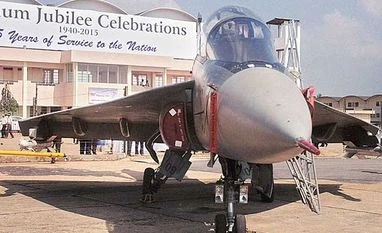
HAL will also double the production of the home-grown light combat aircraft Tejas to 16 a year in anticipation of the 108-plane order for the Mk1 make. The expansion will cost the company Rs 2,100 crore, half of which will be borne by HAL and a quarter each by the navy and air force.
WAITING IN THE WINGS
Hindustan Aeronautics Ltd (HAL) will float a global tender to build a 50-70 seater passenger aircraft in March
India to require 200 small passenger jet aircraft in the next five years
HAL’s plans to develop regional transport aircraft RTA-70 in partnership with National Aerospace Laboratories (NAL) has been scrapped
Project to develop 50-70 seater aircraft likely to cost Rs 7k cr
NAL’s small passenger aircraft Hansa has had no takers, while Saras project did not take off after a crash
“The biggest weakness of the aerospace industry in India is the dependency on foreign engines. In the next 25 years, I see India having its indigenous aircraft with indigenous engines,” Suvarna Raju said.
HAL has sanctioned Rs 458 crore for the development of a turbofan engine that ran its first test on December 14. The design and development programme for an engine for small helicopters is also on.

 "HAL to seek foreign partners for small passenger plane")


 Connect with us on WhatsApp